Laser Distance Meters for Room Measurements and Home Renovations
A narrow hallway, a kitchen island, and a second-floor ceiling have something in common: they are awkward to measure with a tape unless someone holds the other end. A laser distance meter makes straight-line room measurements faster to repeat, but choosing one requires more thought than buying the model with the longest advertised range. A brighter beam helps you see the target, a clear reference edge prevents a whole tool-length of error, and the right calculation modes can simplify flooring and paint estimates. This guide compares laser distance meters for room measurements, remodeling, cabinet planning, and longer property jobs. It explains where inexpensive tools make sense, when Bluetooth or a viewfinder earns its cost, and why a tape measure still belongs in the toolbox for cuts and irregular surfaces.
Quick Picks: Bosch GLM165-40 for general renovation · Klein 93LDM100C for pocket carry · Fanttik A10 Pro for a tape-and-laser combination · Bosch GLM400C for outdoor range
How we selected: We compared exact manufacturer specifications, published documentation, measurement modes, beam visibility, reference-point options, and practical fit for common renovation jobs. These are research-based recommendations, not firsthand product tests. Product offers and configurations can change.
Laser Distance Meter Comparison
Buying Tip: If your project involves final cutting, choose a laser meter that makes the reference edge and measurement units obvious, then verify every installation-critical dimension with a physical tape.
| Model | Range | Notable features | Practical use | Amazon |
|---|---|---|---|---|
 1. Bosch BLAZE Pro GLM165-40 |
165 ft | Area, volume, 10-reading memory | Home renovation layouts that need saved readings | Check the latest price on Amazon |
 2. Bosch BLAZE GLM100-23 |
100 ft | Graphic screen, straightforward controls | Simple wall-to-wall measurements in typical rooms | Check the latest price on Amazon |
 3. Klein Tools 93LDM100C |
100 ft | Compact; front/rear reference | Pocket-size cabinet and trim checks | Check the latest price on Amazon |
 4. Bosch BLAZE GLM165-22 |
165 ft | Color display, rounding, reinforced housing | Busy indoor jobsites with repeated layout work | Check the latest price on Amazon |
 5. Bosch BLAZE GLM165-25G |
165 ft | Green spot, color display | Locating the laser spot on difficult indoor targets | Check the latest price on Amazon |
 6. Fanttik A10 Pro 2-in-1 |
165 ft laser; 9.8 ft tape | Digital tape plus laser, rechargeable | Switching between contact measurements and wall distances | Check the latest price on Amazon |
 7. Bosch BLAZE GLM165-27CGL |
165 ft | Green beam, Bluetooth, included Li-ion battery | Digitally documenting complex renovation measurements | Check the latest price on Amazon |
 8. Leica DISTO D1 |
130 ft | Basic distance plus Bluetooth transfer | Compact measurements paired with room sketches | Check the latest price on Amazon |
 9. Bosch BLAZE Outdoor GLM400C |
400 ft | Digital viewfinder, Bluetooth | Long outdoor spans and hard-to-see laser targets | Check the latest price on Amazon |
 10. RockSeed S2-50M |
165 ft | Bubble levels, backlit display, calculations | Cost-conscious DIY room estimates | Check the latest price on Amazon |
Individual Laser Distance Meter Reviews
1. Bosch BLAZE Pro GLM165-40
Best for: Home renovation layouts that need saved readings.
For planning flooring, room painting, or the location of built-in furniture, the Bosch GLM165-40 is a sensible step above a one-button distance reader. Bosch specifies a measuring range up to 165 feet, accuracy up to one-sixteenth of an inch under appropriate conditions, and an illuminated display. It can calculate area and volume and retain ten measurements, which is useful when moving between rooms without constantly writing down each value. The rear-edge measuring reference is important: rest the housing squarely against the starting wall instead of estimating from the center of the device. This is principally an indoor planning choice; the laser spot is harder to follow across long outdoor distances or on highly reflective surfaces. Choose it when memory and conventional calculations matter more than smartphone synchronization. The larger maximum range is not a promise of equal performance on every target.
Model specification reference: Bosch BLAZE Pro GLM165-40 product information.
2. Bosch BLAZE GLM100-23
Best for: Simple wall-to-wall measurements in typical rooms.
The GLM100-23 fits someone who wants to replace repeated tape-measure runs across bedrooms, kitchens, or a hallway without learning a complicated menu system. Bosch lists a 100-foot red-beam range and an illuminated graphic display designed to make a measurement easier to read. For furniture placement, that combination can be more valuable than a long checklist of less frequently used calculation modes. Point to a firm, flat surface, take the reading, and repeat from the same reference edge when comparing clearances. It is especially appropriate for checking whether a sofa, bookcase, or table will fit between walls after allowing for baseboards. Buyers should not mistake the displayed precision for a guarantee that a crooked target or wrong reference point is harmless. For tall exteriors or distant garden targets, use a tool purpose-built for more demanding sighting conditions instead.
Model specification reference: Bosch BLAZE GLM100-23 product information.
3. Klein Tools 93LDM100C
Best for: Pocket-size cabinet and trim checks.
Klein’s 93LDM100C is designed around distance rather than a large collection of geometric functions. Its compact body helps when a kitchen cabinet, trim detail, or partially furnished room makes a traditional tape awkward to hold. Klein describes single and continuous measurement modes and a reverse-contrast screen that shows the two most recent readings. The ability to measure from either the top or bottom reference is particularly useful, provided the selected reference is confirmed before recording dimensions. Manufacturer accuracy is approximately plus or minus one-sixteenth inch up to about 33 feet, changing to one-eighth inch at longer distances within its 100-foot range. This means it should not be treated as having one universal tolerance across all tasks. If you frequently estimate paint, flooring, or room volume directly on the device, look elsewhere; this tool is better when you want uncomplicated spot measurements.
Model specification reference: Klein Tools 93LDM100C product information.
4. Bosch BLAZE GLM165-22
Best for: Busy indoor jobsites with repeated layout work.
The Bosch GLM165-22 is a middle ground between a budget room measurer and a connected professional instrument. Its color display is easier to scan in low light, while the rounding button is useful when a project is discussed in familiar construction fractions instead of a string of decimals. Bosch specifies a 165-foot measuring range, accuracy up to one-sixteenth inch in suitable conditions, and reinforced housing. For a renovation involving numerous door openings, closet dimensions, and rough framing locations, these conveniences reduce transcription friction. A rounded display should not be confused with a more accurate physical reading: record enough precision for the work, and confirm fit-critical dimensions with a tape. Also check the exact package’s power arrangement and included accessories rather than assuming every Bosch model shares a battery. People focused on simple room measurements may find the extra interface unnecessary.
Model specification reference: Bosch BLAZE GLM165-22 product information.
5. Bosch BLAZE GLM165-25G
Best for: Locating the laser spot on difficult indoor targets.
A laser meter is only useful when you can tell where its beam actually lands. The Bosch GLM165-25G addresses that problem with a green beam that Bosch describes as producing a noticeably brighter visible spot than a standard red beam. Its claimed 165-foot measuring range and backlit color screen make it relevant for larger interior spaces where a red point blends into the background. Use it for ceilings, long living rooms, or a wall with mixed finishes when you need to recheck the aiming point before trusting the number. Green visibility alone does not make the device an outdoor surveying instrument; ambient light, distance, material color, and target angle still matter. Compare the extra cost against the time you really spend trying to spot a red laser. For straightforward, short-distance measurements indoors, a less expensive red-beam model may meet the same practical need.
Model specification reference: Bosch BLAZE GLM165-25G product information.
6. Fanttik A10 Pro 2-in-1
Best for: Switching between contact measurements and wall distances.
Some room projects call for two very different measurements: a long straight span to the far wall and a short, direct measurement around an appliance handle or a trim projection. The Fanttik A10 Pro combines a laser distance meter rated to 165 feet with a 9.8-foot physical tape, helping users switch without carrying two separate tools. Fanttik also highlights its color display, rechargeable design, and calculation modes for area and volume. This is a particularly practical style for planning closets, checking furniture gaps, and taking down room dimensions, because a rigid contact point is not always available for the laser. The tradeoff is that its physical tape is not a replacement for a full-length tape needed for certain carpentry tasks. Keep laser and contact readings labeled clearly; a mixed set of dimensions is easy to misinterpret after a busy day of measuring.
Model specification reference: Fanttik A10 Pro 2-in-1 product information.
7. Bosch BLAZE GLM165-27CGL
Best for: Digitally documenting complex renovation measurements.
For someone capturing measurements room by room, writing numbers on scraps of paper is often the weak link in an otherwise accurate process. The Bosch GLM165-27CGL combines a 165-foot green-beam meter with Bluetooth transfer to Bosch MeasureOn, allowing measurements to be organized with room photos and notes. Bosch also documents an inclinometer, indirect measurement functions, IP65-rated housing, and a rechargeable lithium-ion battery supplied with this particular configuration. Pay attention to the final letter in the model name: the CGL package is not interchangeable with every similarly named green-beam model when comparing included battery options. The app does not decide where a wall begins or whether an alcove counts toward flooring square footage; you still need a measurement plan. This higher-end option makes most sense for frequent documentation, not for the occasional shelf measurement where a simpler tool is faster.
Model specification reference: Bosch BLAZE GLM165-27CGL product information.
8. Leica DISTO D1
Best for: Compact measurements paired with room sketches.
The Leica DISTO D1 concentrates on reliable linear measurements in a compact package rather than presenting every mode on the instrument itself. Leica describes a range of up to 40 meters, approximately 130 feet, and Bluetooth communication with its measurement app. That combination suits a home-improvement shopper who wants to capture room widths, door openings, or ceiling heights and then place those numbers into a phone-based sketch. Its streamlined controls may be easier to learn than a more feature-heavy laser. The primary limitation is that Bluetooth does not magically produce a perfect floor plan: you need to enter the right wall association, account for offsets, and double-check diagonals. Also verify the exact US listing, package generation, and support details before ordering, because market availability can differ across variants and sellers. Choose it for the connected basics rather than outdoor visibility or specialist geometry.
Model specification reference: Leica DISTO D1 product information.
9. Bosch BLAZE Outdoor GLM400C
Best for: Long outdoor spans and hard-to-see laser targets.
For exterior renovation plans, property-side measurements, and large open spaces, seeing the laser spot can be more difficult than taking the reading itself. Bosch’s GLM400C has a digital viewfinder with zoom, intended to help locate the aiming point at a distance in daylight, as well as a manufacturer-rated maximum range of 400 feet. The Bluetooth connection adds value when documenting repeated measurements around a property. This is not a substitute for a land survey, a calibrated site layout, or checking obstructions and safety before using the beam outdoors. At long distances, holding the tool steady and selecting a well-defined target are especially important. Someone measuring only interior walls may pay for hardware they rarely use, while a person routinely working outside could find the sighting feature worth the upgrade. Keep environmental and target conditions in mind rather than trusting the range headline alone.
Model specification reference: Bosch BLAZE Outdoor GLM400C product information.
10. RockSeed S2-50M
Best for: Cost-conscious DIY room estimates.
The RockSeed S2-50M is an approachable alternative for homeowners who need occasional distance and area estimates without investing in an extensive professional feature set. Its published product documentation describes a 165-foot range, a backlit display, calculation modes, and two bubble levels on the housing. The levels can help you notice obvious tilt, but they do not guarantee that the laser spot is aligned with the exact point you intend to measure. For measuring a rectangular room, take multiple readings from a stable surface and repeat any dimension that looks inconsistent with the layout. Short distances and known reference points are sensible places to check the tool before a project begins. Compared with established professional lines, publicly available evidence for long-term durability and service is thinner, which is a legitimate value tradeoff rather than a reason to assume poor performance. Keep a physical tape for final installation cuts.
Model specification reference: RockSeed S2-50M product information.
How to Choose a Laser Distance Meter for Room Measurements
The right laser distance meter for home renovations depends on the surfaces, distances and notes your particular project requires. Matching the tool to the task prevents both overpaying and false confidence in a reading. Compare the following features before ordering.
Range and accuracy describe different things
A 165-foot maximum range means the instrument may measure that far under suitable conditions; it does not say the visible beam is easy to find in full sunlight. Accuracy is typically specified under controlled conditions and often changes with distance, temperature, reflectivity, or aiming geometry. A compact 100-foot model can be a better fit for an apartment than a feature-heavy 400-foot device. If you are choosing a laser distance meter for flooring measurements, an area function can speed up initial estimates; for fit-critical carpentry, repeat measurements and confirm with a physical tape at the installation site.
Know your measuring reference
Many meters measure from the rear of the housing, while others can switch to the front or an extended end piece. Measure between two walls with the rear edge flush against the first wall when that is the active reference. If the wrong edge is used, your error can be roughly the length of the instrument. Check the display’s current unit: decimal feet and feet-and-inches can look similar but lead to costly cut errors. A laser records a line to the target, not the clearance around curved trim or protruding handles. For a laser measure for cabinet installation, confirm both the measured wall span and the usable clearance past trim, hinges and appliance handles.
Area, volume, and indirect modes are conveniences—not substitutes for a sketch
A typical rectangular floor area is length multiplied by width. A built-in area function saves arithmetic, but irregular rooms need to be broken into rectangles and measured separately. For paint, subtract large doors or openings only after understanding the estimator you are using. Indirect height measurements use triangles or angles and can magnify small aiming errors. Room volume is useful background information but should never be treated as an HVAC engineering calculation.
Green beam, Bluetooth, or viewfinder: which upgrade helps?
A green laser distance meter for bright rooms can make the target point easier to locate across a large interior, but the spot may still disappear outdoors. A laser distance meter with Bluetooth for floor plans is most helpful when you repeatedly document measurements in a room sketch; the app does not automatically know which wall each number belongs to. An outdoor laser distance meter with viewfinder is a more practical upgrade for distant exterior targets than for a kitchen wall. Choose the upgrade that fixes the problem you have, not the highest specification on the box.
A compact decision aid
Small rooms and occasional shelves: prioritize a clear display and simple controls. Flooring, painting, or multiple renovation rooms: prioritize area calculations and easy recording. Cabinets and awkward recesses: prioritize an unambiguous reference edge and keep a physical tape handy. Long exterior targets: look for a suitable sighting method and stable support. Phone-based renovation notes: consider connected models and verify the app works with your device before buying.
Setup, Measuring Technique, and Common Problems
Five steps to a more dependable measurement
1. Install or charge the correct battery. 2. Confirm the device’s units, beam location, and reference edge. 3. Hold the meter square to a firm, visible target; use a target plate where the maker recommends one. 4. Take at least two measurements, moving the tool slightly and repeating any inconsistent result. 5. Label the number by room, direction, and reference point before starting another measurement. Compare one familiar distance with a tape to catch obvious setup mistakes.
Problem: the laser sees the mirror, window, or a dark surface poorly
Glass and mirrors can cause confusing returns; black or glossy materials may reduce usable signal. Aim at an opaque, matte target placed at the exact surface position when permitted, then measure again. Never assume a flashing or unstable reading represents the wall behind a reflective object. Follow manufacturer guidance for any target plate and do not look into the beam.
Problem: the red or green dot disappears in daylight
Reducing direct light, moving closer, and using a suitable target can help, but some outdoor spans need a viewfinder. A longer quoted range by itself will not make the dot visible on a bright exterior wall. Do not point toward people, vehicles, or aircraft while trying to locate the spot. For property boundaries, obtain a proper survey instead of treating laser readings as legal evidence.
Problem: the floor plan is off by several inches
First inspect the reference-point setting, then check whether a decimal-foot reading was mistakenly transcribed as feet-and-inches. Confirm that the beam ended on the intended wall rather than furniture or trim, and take diagonal checks across a rectangular room. When planning cabinets, check baseboard thickness, door swing, and appliance protrusions. The related narrow shoe storage cabinet guide and under-sink organizer guide explain why nominal cabinet dimensions and usable interior clearances differ.
Problem: repeated readings drift or buttons stop responding
Check charge or battery contacts, clean the optical opening according to the manufacturer’s instructions, and let the meter acclimate after large temperature changes. Use a known fixed span for a consistency check. Moisture and impact can affect reliability even on a water-resistant tool. If readings remain inconsistent, consult the device’s manual and service process rather than attempting internal laser adjustment.
Problem: the laser says the overhead area fits but installation still fails
A straight ceiling-height reading does not include obstructions such as joists, ductwork, pipes, a sloping ceiling, or the clearance needed to operate a lift. Plan multiple points and measure from the correct finished-floor reference. For overhead projects, consult the overhead garage rack buying guide, which focuses on headroom and nearby obstacles. For a projector, measured throw distance is only one part of selecting screen size; see the projector guide for the separate brightness and placement tradeoffs.
Frequently Asked Questions
How accurate is a laser distance meter indoors?
Some professional models advertise accuracy as tight as plus or minus one-sixteenth inch under stated test conditions; other tools and longer distances have wider tolerances. Check the exact manufacturer’s specification and verify repeatability against a known dimension before relying on the reading for a costly cut.
Can I use one to measure a room for new flooring?
Yes, a meter can capture long, straight wall distances and some calculate rectangular area. When using a laser distance meter for flooring measurements, sketch the room, divide irregular spaces into sections, account for alcoves and obstacles, and apply the flooring manufacturer’s waste guidance separately. Always confirm the final installation dimensions with a physical tape.
Does a green laser work outdoors in direct sunshine?
A green spot can be easier to see in many situations, but bright sunlight and reflective or distant targets can still make it difficult. Outdoor work often benefits more from a viewfinder and stable aim than from changing beam color alone.
Is a laser meter the same as a laser level?
No. A distance meter measures the span between its reference point and a target. A laser level projects lines or planes to establish alignment. For cabinets or shelving, you may need both a distance measurement for fit and a level for installation alignment.
Do I need Bluetooth for measuring rooms?
Only if you want measurements transferred into compatible phone notes or sketching software. A laser distance meter with Bluetooth for floor plans can save transcription, but if you record a few numbers in a notebook, a simple display often saves money and setup time. Check app compatibility and whether its export format matches your workflow.
What should I do when the measurement jumps or shows an error?
Verify that the target is opaque and not angled, clear the optical area as instructed, check battery power, and repeat from a stable position. A mirror, bright window, dark finish, or oblique beam can produce inconsistent returns. Consult the exact model manual if the error persists.
Final Verdict
For most indoor remodelers who want useful calculation functions without an elaborate digital workflow, the Bosch GLM165-40 is a balanced place to start. Match the tool to your actual measuring problem rather than paying only for headline range.
- For simple rooms: Bosch GLM100-23 keeps the interaction straightforward.
- For compact trim checks: Klein 93LDM100C gives you a small, focused distance tool.
- For room-by-room documentation: Bosch GLM165-27CGL adds connected notes and a brighter beam.
- For long outdoor targets: Bosch GLM400C offers a viewfinder.
Whichever model you choose, use a firm target and the correct measuring reference, then confirm critical installation dimensions with a tape. A good measurement is one you can reproduce.
Sources and Photo Credit
Specifications and practical limitations were cross-checked against available Bosch measuring-tool information, Klein Tools documentation, Leica DISTO product information, and Fanttik product details. Features, accessories and supported applications depend on exact model and package. All model rankings are editorial comparisons based on stated features and intended uses; no hands-on testing is claimed.
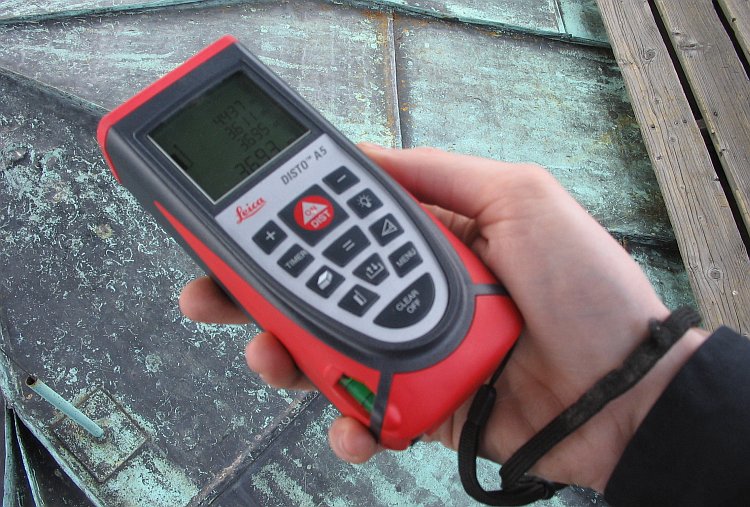
Featured image: a representative handheld laser distance meter, not one of the models reviewed. Photograph by Krzysztof Maria Różański, licensed under Creative Commons Attribution 2.5; unmodified.
As an Amazon Associate, Size Them Up earns from qualifying purchases.