Roof Rakes for Snow Removal: 10 Tools Compared for Safer Winter Roof Care
Looking for roof rakes for snow removal that let you work from the ground? The right model depends on your eave height, roof covering, snowfall and the amount of control you can maintain with a long pole. A lightweight telescoping roof rake can be convenient for clearing a small section of fresh powder, while a wheeled slide-style system may be more useful when you need to move larger amounts without dragging every load back by hand. Neither type is safe for every building.
We compared ten identifiable snow roof rakes, covering poly and aluminum blades, traditional pull rakes, angled roller heads and snow-slide systems. The emphasis is on how these tools work, where their advertised reach can mislead, how their heads contact shingles, and which kinds of roofs may call for professional help. Use the four-column comparison chart to narrow your choices, then read the individual reviews and the safety-focused buying guide before choosing equipment for your home.
Affiliate disclosure: As an Amazon Associate, SizeThemUp may earn from qualifying purchases. Prices, ratings, availability and included accessories change; confirm the exact model and seller on the product listing.
Roof Snow Rakes: Comparison Chart
These ten tools tackle different roof types and snow conditions. Check actual pole length, not only total advertised reach.
| Tool & Photo | Best For | Key Design | Amazon |
|---|---|---|---|
 1. Snow Joe RJ204M |
Lightweight everyday clearing | 21-ft telescoping pole; 25-in. poly head | Check Amazon |
 2. Extreme Max Shingle-Saver |
Angled clearing with blade rollers | 21-ft sectional pole; 24-in. blade and rollers | Check Amazon |
 3. Avalanche! 500 |
Slide-style clearing on shingles | 15.5-ft fiberglass pole; 12-ft slide; wheels | Check Amazon |
 4. SNOWPEELER Premium |
Large roofs needing extra reach | Up to 30-ft sectional pole; 10-ft snow slide | Check Amazon |
 5. Avalanche! 750 |
Slide system with taller wheels | 15.5-ft fiberglass pole; 3-in. wheels; coated slide | Check Amazon |
 6. Snow Joe RJ208M |
Extended slide-style clearing | Advertised reach up to 28 ft; long debris slide | Check Amazon |
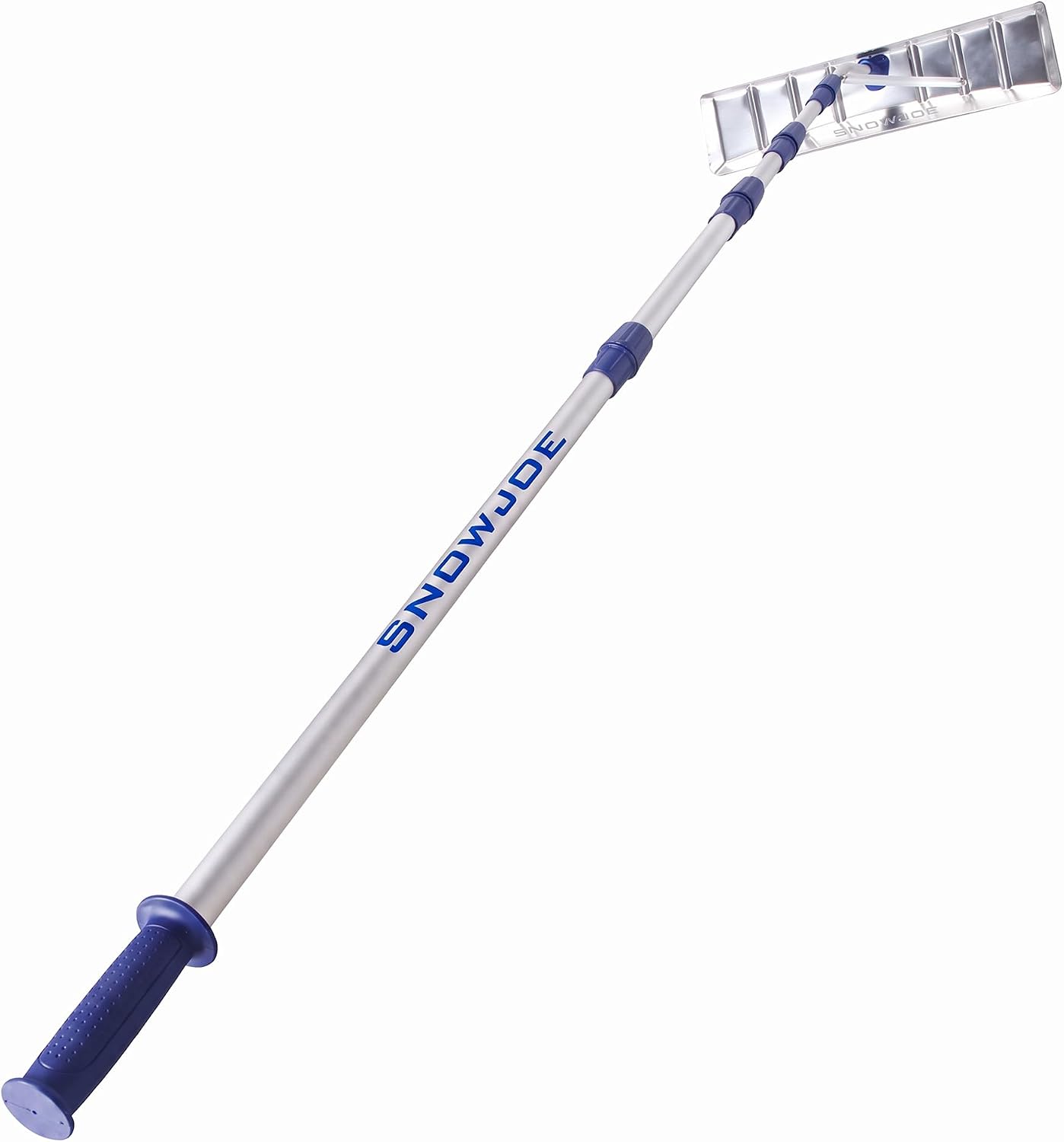 7. Snow Joe RJ205M |
Dense snow with careful technique | 21-ft telescoping pole; 25-in. aluminum head | Check Amazon |
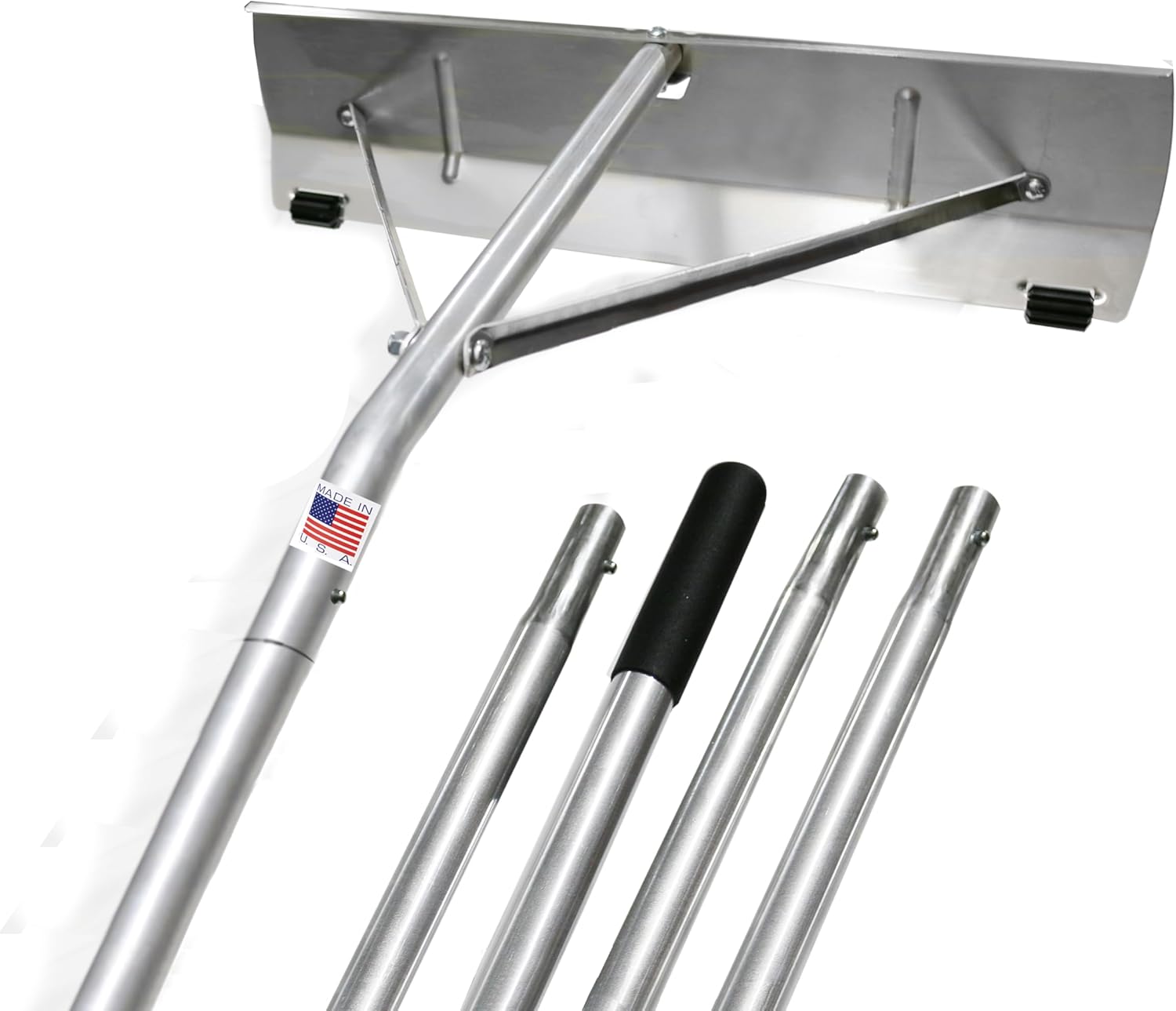 8. USA Handy Tools 89421 |
Classic sectional pull-raking | About 20-ft sectional pole; 24-in. head | Check Amazon |
 9. Suncast SRR2100 |
Curved-head roof-edge clearing | 7–21-ft adjustable pole; 21-in. curved head | Check Amazon |
 10. VEVOR 21-ft poly rake |
Budget-style poly-blade alternative | Up to 21-ft pole; 25-in. ABS head | Check Amazon |
How to Choose a Roof Rake for Snow
Measure eave height before comparing pole length
A two-story home does not have a universal eave height. Measure or safely estimate the distance from the ground to the eave, keeping the pitch of the roof and your working angle in mind. A rake labeled “27-foot reach” may count the operator’s height; the actual pole may be only 21 feet. More length also means more leverage and shoulder strain. Choose the shortest controllable pole that reaches the intended roof section from safe, clear ground.
Poly blades, aluminum blades and raised rollers
Polymer blades tend to be gentler than bare metal, but can still damage roofing if pushed against shingles or roof hardware. Aluminum blades can move denser snow but are easier to scrape or gouge with. Wheel- or pad-supported frames separate the working edge from the surface when used as designed, though they do not eliminate all risk. Check roof-specific instructions for asphalt shingles, metal panels, tile and solar modules.
Traditional pull rake versus slide-style system
A pull rake drags smaller amounts of snow down toward the edge and is easy to store. A slide-style rake pushes a frame up the slope and directs the separated snow down a flexible chute. Slides can reduce repeated pulling, but introduce more parts and require a safe unloading area. Wind, obstructions, gutters and the building’s pitch all affect how well a slide works.
Weight, joints and storage
A few pounds become noticeable when a long pole is held overhead. Telescoping shafts adjust quickly, but locks must be secure and clean. Sectional designs may feel more stable at shorter lengths but require assembly, storage and compatible replacement parts. Verify package contents: a product page may list a head, adapter or extension kit separately from a complete rake.
One practical buying tip
Make a three-part checklist: your actual eave height, your roofing material, and the type of snow you usually remove (loose, wet or crusted). Only buy a rake that matches all three while leaving room for a safe ground position. Avoid paying for maximum reach that you cannot realistically control.
Ten Snow Roof Rakes Reviewed
1. Snow Joe RJ204M Telescoping Roof Rake
Check the latest price on Amazon
Best for: Lightweight everyday clearing. Design: 21-ft telescoping pole; 25-in. poly head.
The Snow Joe RJ204M is a practical starting point for homeowners who want a familiar pull-style snow rake without juggling several snap-together pole sections. Its Twist-n-Lock aluminum handle extends to roughly 21 feet, while the 25-inch-wide polymer head is intended to pull loose snow toward the eaves. At a published weight of around 4.8 pounds, it is easier to handle overhead than some large slide systems. That matters when clearing multiple roof sections in one session. A plastic blade is preferable to scraping with exposed metal, but this model has no raised wheels, so it still needs a gentle touch. The long extension is not an invitation to stand beneath falling snow or to reach a roofline beyond your control. Best for straightforward roof edges with fresh, moderate snow.
2. Extreme Max Shingle-Saver Angled Roof Rake
Check the latest price on Amazon
Best for: Angled clearing with blade rollers. Design: 21-ft sectional pole; 24-in. blade and rollers.
The Extreme Max Shingle-Saver suits people who want the familiar motion of a traditional pull rake but prefer a head that rides on rollers. Its angled blade, reported at about 24 inches wide, is designed to draw snow down low-pitched roof sections. The rollers create separation between the cutting edge and the roofing surface, which may reduce rubbing when the user handles the tool correctly. The aluminum sectional pole assembles to a claimed 21 feet; unlike a twist-lock pole, changing the length means adding or removing segments. The blade material and roller layout must still be matched to your roof covering before use. Do not assume rollers prevent all damage: grit, exposed fasteners and roof edges remain vulnerable. It is a useful option when shingles are the priority but you do not want a slide-style rake.
3. Avalanche! Original 500 Roof Snow Removal System
Check the latest price on Amazon
Best for: Slide-style clearing on shingles. Design: 15.5-ft fiberglass pole; 12-ft slide; wheels.
The Avalanche! 500 takes a different approach to snow removal. Instead of repeatedly pulling a blade toward yourself, you push a cutting frame beneath the snow so the separated material travels down a flexible chute. The model uses a roughly 15.5-foot sectional fiberglass handle, a 17-inch cutter frame, a slide that extends approximately 12 feet and 1.5-inch wheels designed for common asphalt-shingle roofs. This can be less strenuous than dragging the full mass of a wet snow slab in one pull. The trade-off is reach: the handle is shorter than several telescoping pull rakes, and the slide needs a clear drop zone. Work slowly, never stand under an unloading slab, and check that the roof pitch and surface match the maker’s instructions. A strong fit for accessible eaves with recurring accumulation.
4. SNOWPEELER Premium 30-Foot Roof Snow Rake
Check the latest price on Amazon
Best for: Large roofs needing extra reach. Design: Up to 30-ft sectional pole; 10-ft snow slide.
The SNOWPEELER Premium is aimed at roofs where a standard 15- or 20-foot tool falls short. Its long sectional handle reaches a published maximum of about 30 feet and feeds snow onto a roughly 10-foot slide. The cutting frame is about 18 inches wide, with glide pads intended to reduce direct contact with the roof covering. On a broad low-slope roof, the slide design can clear a path without hauling each block of snow back along the shingles. The length is also its biggest liability. A long lever is tiring to steer, especially in gusts, and the tool must be positioned where falling snow cannot strike the operator. This is not automatically suitable for tall or complex roofs; if you cannot maintain control or visibility from a safe ground position, professional removal is the better choice.
5. Avalanche! Original 750 Multi-Roof Snow Rake
Check the latest price on Amazon
Best for: Slide system with taller wheels. Design: 15.5-ft fiberglass pole; 3-in. wheels; coated slide.
The Avalanche! 750 builds on the push-and-slide concept of the Avalanche! 500 but uses taller wheels and a tougher coated slide for roof surfaces where greater clearance is helpful. Its approximately 15.5-foot fiberglass handle uses snap-together sections. A 17-inch cutter directs snow onto a flexible sheet instead of forcing the user to pull all the material manually. The 750 has been marketed for multiple roof types, including certain metal, tile and shake surfaces, but surface compatibility is never universal: consult both the tool maker and your roofing manufacturer before contacting specialty roofing or solar installations. The larger wheels can help the cutting frame clear surface irregularities, yet they cannot prevent damage if the tool collides with hardware. Choose this one when the roof profile suits the manufacturer’s approved use and the handle is long enough.
6. Snow Joe RJ208M Roof Rake With Snow Slide
Check the latest price on Amazon
Best for: Extended slide-style clearing. Design: Advertised reach up to 28 ft; long debris slide.
The Snow Joe RJ208M combines sectional aluminum extension pieces, a rolling cutter and a fabric snow slide. Retail descriptions advertise as much as 28 feet of reach and a long slide of about 20 feet, but buyers should confirm whether the listed reach describes the physical assembled pole or includes the operator’s height. The appeal is a chute that carries material away from the head as it separates, limiting the repeated pulling associated with broad-blade roof rakes. However, a long fabric sheet can twist or blow in windy conditions, and the parts require more setup than a simple telescoping handle. Check the current package for the exact frame width, number of sections and slide length because marketplace listings can be inconsistent. Best for accessible roof sections where a snow slide will have a safe, unobstructed place to unload.
7. Snow Joe RJ205M Aluminum-Blade Telescoping Roof Rake
Check the latest price on Amazon
Best for: Dense snow with careful technique. Design: 21-ft telescoping pole; 25-in. aluminum head.
The Snow Joe RJ205M shares the telescoping format of the RJ204M but replaces the polymer head with an aluminum blade. That makes the tool more aggressive against dense or crusted snow, especially when the surface layer resists a flexible plastic scoop. Its handle is described as extending from approximately 6.2 to 21 feet, with a 25-inch-wide head and a listed weight around 5.7 pounds. The metal head is the important trade-off: it can scrape or mark roof coverings, particularly asphalt shingles, painted metal and fragile materials. Do not dig through ice or rake directly down to roofing material. Massachusetts emergency guidance recommends leaving two or three inches of snow rather than scraping clean. If gentle snow removal is your goal, start with a poly blade or raised-wheel system; reserve this option for appropriate roofs and techniques.
8. USA Handy Tools 89421 Roof Snow Rake
Check the latest price on Amazon
Best for: Classic sectional pull-raking. Design: About 20-ft sectional pole; 24-in. head.
The USA Handy Tools 89421 offers a straightforward alternative to an elaborate cutting frame and slide. Available descriptions identify an approximately 20-foot sectional aluminum handle and a blade near 24 inches wide, making it appropriate to compare with other traditional snow rakes. A simple pull design has fewer moving pieces to clean or dry after use, and the shorter assembled configurations can be easier to maneuver around porch roofs and low eaves. It still demands a clear overhead path and steady footing; aluminum poles are conductive, so any nearby service wires rule out DIY use. Verify that the listing includes the exact number of sections and the expected head style, since accessory bundles may vary by seller. Choose it for basic roof-edge snow removal when you want sectional adjustability rather than a fabric chute.
9. Suncast SRR2100 Adjustable Roof Rake
Check the latest price on Amazon
Best for: Curved-head roof-edge clearing. Design: 7–21-ft adjustable pole; 21-in. curved head.
The Suncast SRR2100 stands out for its curved head rather than a flat rectangular snow-pushing plate. The design helps gather and draw loose snow toward the eaves on roof edges that can be safely accessed from the ground. Published descriptions put the adjustable pole at roughly 7 to 21 feet and the scoop around 21 inches wide. This lets the same rake work on lower porch roofs and on taller eaves without needing a separate tool. At the far end of its range, however, the longer assembly can be awkward and heavy; guide the head with controlled short passes rather than large pulling motions. There are no wheels to isolate the curved head from the roof, so a thin protective layer of snow should be left in place. This model is a useful option for people who prefer a curved scoop feel to a wide straight blade.
10. VEVOR 21-Foot Plastic-Blade Snow Roof Rake
Check the latest price on Amazon
Best for: Budget-style poly-blade alternative. Design: Up to 21-ft pole; 25-in. ABS head.
The VEVOR 21-foot plastic-blade rake offers an alternative to the better-known snow-removal brands. Retail descriptions identify an aluminum pole that extends to approximately 21 feet and a polymer or ABS head around 25 inches wide. The lighter-contact blade material is appealing for asphalt-shingle owners who want to avoid exposed metal edges. As with other long pull rakes, the key to success is moving small portions of snow instead of levering a heavy compacted sheet off the roof at once. Check how the pole joints lock, how the head is braced and what the current package actually includes. Do not rely on generic marketplace photos for precise roof compatibility or blade durability. This is worth evaluating for simpler fresh-snow clearing, but buyers prioritizing long-term parts availability may prefer a well-established model.
How to Remove Snow From a Roof More Safely
Roof snow removal can be dangerous even when both feet remain on the ground. Review your roof’s condition before starting. The Massachusetts roof collapse and snow removal safety guidance recommends starting at the edge, shaving snow down to leave approximately two to three inches rather than scraping shingles clean, staying clear of utility wires and avoiding ladders. Guidance for work crews from OSHA also emphasizes reducing the need to work at height, controlling falling material and recognizing electrical hazards.
- Look up and around first. Identify wires, roof vents, icicles, fragile overhangs, skylights and the path where the snow will fall. If anything is unclear, stop.
- Use stable ground only. Never stand on a ladder or roof with a rake. Wear boots with traction, eye protection and a suitable helmet where falling ice or snow is a concern.
- Clear people and belongings from the drop zone. Do not position yourself directly beneath the section being worked on.
- Start at the roof edge with manageable passes. Work in small sections and avoid a sudden release of a large snow mass. Never chip frozen ice or scrape bare roofing.
- Leave a protective snow layer. Stop short of the shingles or other roof surface, following both the rake and roof manufacturers’ instructions.
- Stop if control is uncertain. Long poles near power lines, an unusual roof layout, structural warning signs or heavy ice call for a qualified professional.
What a Roof Rake Can—and Cannot—Do About Ice Dams
Removing snow near the eaves can reduce the meltwater available to feed an ice dam, but it does not resolve the underlying heat-loss problem. University of Minnesota Extension explains that warm roof sections melt snow, which can refreeze at colder eaves. Long-term prevention often involves sealing air leaks and improving insulation rather than repeatedly raking the roof. Rakes are maintenance tools, not a substitute for roof inspections or structural assessment after unusually heavy snow.
Frequently Asked Questions
What is the best roof rake for snow on asphalt shingles?
Look for a polymer blade or a wheel- or pad-supported head with an appropriate roof rating, then confirm that you can reach the eave without scraping the shingles. The Snow Joe RJ204M and Avalanche! 500 illustrate the two main approaches.
Are roof rakes safe for two-story houses?
Not automatically. A long pole may reach some second-story eaves, but roof height, terrain, overhead wires and the weight of the assembly can make use unsafe. If you cannot maintain a clear view and control from stable ground, hire a professional.
How far up the roof should I rake?
Focus on the accessible lower roof edge where snow may contribute to ice-dam formation. Work within the manufacturer’s instructions and avoid trying to clear the whole roof with an awkwardly long pole.
Should I rake all the way down to the shingles?
No. Massachusetts safety guidance recommends leaving about two to three inches of snow rather than scraping down to bare shingles. Follow any more specific directions for your roof material.
Is a snow slide better than a traditional roof rake?
A slide system can move detached snow with fewer strong pulling strokes, especially on a broad accessible roof. A pull rake is simpler and often less expensive. The slide must have a safe landing zone and enough room to operate.
Can I use a snow roof rake on metal roofing or solar panels?
Only if the tool and roof or panel manufacturers explicitly approve the method. Coatings, seams, mounts, fasteners and glass can be damaged by contact. Avoid improvising with a metal head.
Can roof rakes remove ice dams?
A roof rake removes snow; it is not an ice chisel. Do not hammer, chip or pry ice from a roof. Persistent ice dams may require professional help, plus insulation and air-sealing work to treat the underlying conditions.
When should I call a snow removal professional?
Call a qualified, insured service when you see significant roof deflection, cracking, severe leaks, heavy ice, dangerous falling slabs or a roof too high or complex to reach from safe ground. For apparent structural distress, move away from the building and contact the appropriate emergency or local building authority.
Final Verdict: Match the Roof Rake to Your Home
For a manageable roof edge with fresh snow, the Snow Joe RJ204M is a compelling lightweight telescoping choice. For a wheel-supported, push-and-slide approach on compatible shingles, compare the Avalanche! 500. If the gutter line is too distant for these tools, the SNOWPEELER Premium offers more published reach—but that does not make a difficult, high roof a safe DIY job.
For specialized roof surfaces, look closely at the Avalanche! 750 and confirm compatibility first. If you expect dense snow, the Snow Joe RJ205M offers a metal blade with a greater risk of scraping. The best snow roof rake is not necessarily the longest or most aggressive one. It is the tool you can handle safely, on a roof covering that the manufacturer approves, without climbing and without pulling a large snow slab onto yourself.
Editorial note: Product information is based on published model and retailer details, not first-hand hands-on testing. Amazon product IDs and photos were retrieved, but pricing, review counts and in-stock purchase eligibility must be checked at the retailer before publication.
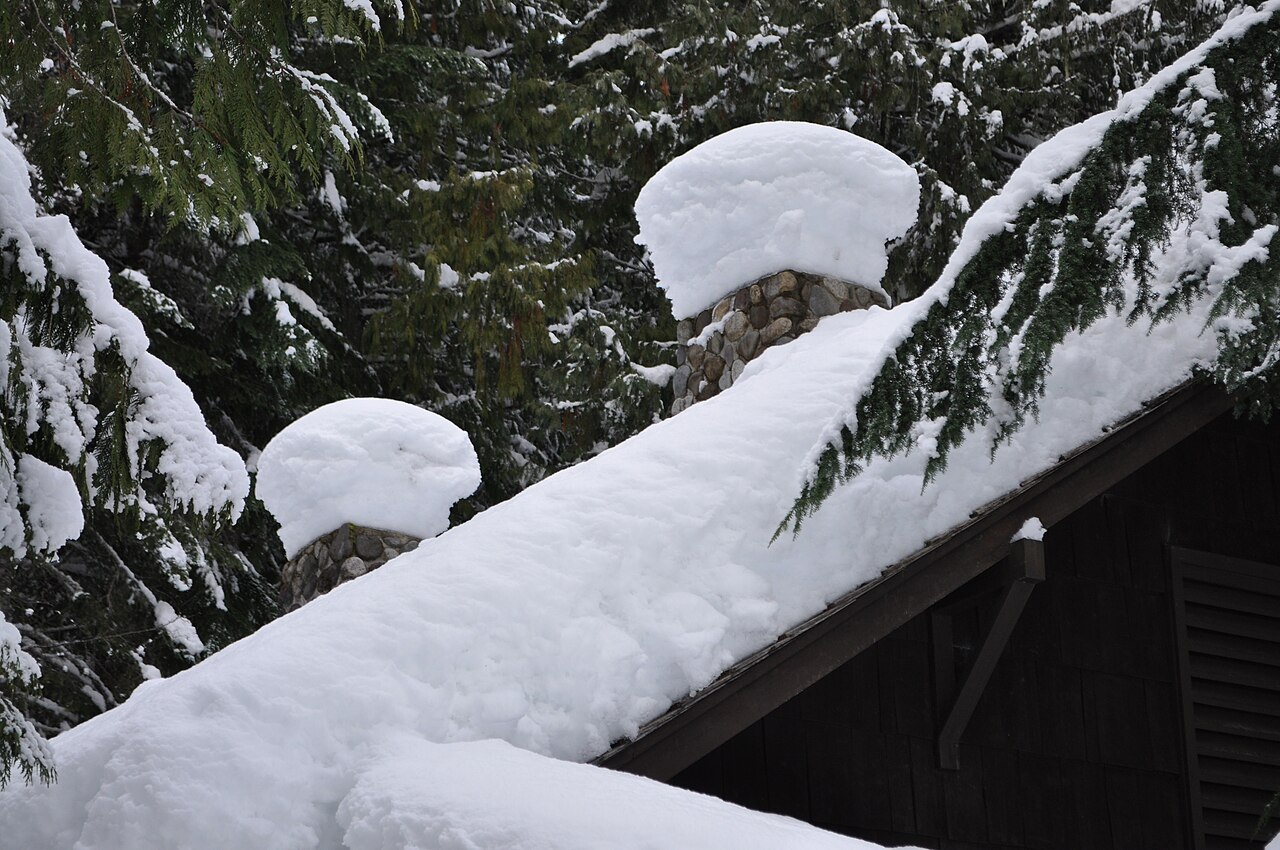
Feature image: Lee Snook / U.S. National Park Service (public domain); source.