Tillers for Breaking New Ground: Gas, Rear-Tine & Electric Models
The best tiller for breaking new ground is not necessarily the lightest or cheapest machine. If you are converting a patch of lawn into a vegetable garden, intact sod, hidden roots and compacted clay place very different demands on a tiller than soil that has been worked before. A counter-rotating rear-tine tiller is usually the more realistic choice for that first pass. A compact front-tine gas tiller can suit smaller or partially cleared plots, while many electric tillers and cordless cultivators work best after the turf has been removed.
This updated comparison focuses on ten specific Amazon-listed models, including gas rear-tine machines for hard ground, adjustable-width front-tine tillers, corded electric alternatives for modest beds and cordless cultivators for ongoing upkeep. You will learn which equipment to buy or rent, how to avoid misleading depth claims, what each model gives up, and which rear-tine tiller for hard clay soil or electric tiller for a small garden bed is the better match for your actual yard.
Affiliate disclosure: SizeThemUp may earn a commission from qualifying purchases through Amazon links at no extra cost to you. Specifications refer to the named models and configurations; no hands-on testing is claimed. Prices, sellers, stock and included accessories can change.
Garden Tiller Comparison Chart
This chart separates machines that can credibly tackle new ground from options better used after sod removal. A cultivator marked “established beds” should not be mistaken for a heavy-duty tiller.
| Model | Power / size | Best use and limitation | Amazon |
|---|---|---|---|
 1. Earthquake Victory 39381 Rear-Tine Tiller |
209cc gas · rear tine16 in; up to 10 in deep | Best for compacted soil and first-pass sod | Check on Amazon |
 2. YARDMAX YT4565 Dual-Rotating Rear-Tine Tiller |
212cc gas · rear tine18 in; up to 6.5 in deep | Best for wider plots and repeat ground prep | Check on Amazon |
 3. Earthquake Pioneer 46059 Rear-Tine Tiller |
127cc gas · rear tine17 in; up to 11 in deep | Best for alternating hard and worked soil | Check on Amazon |
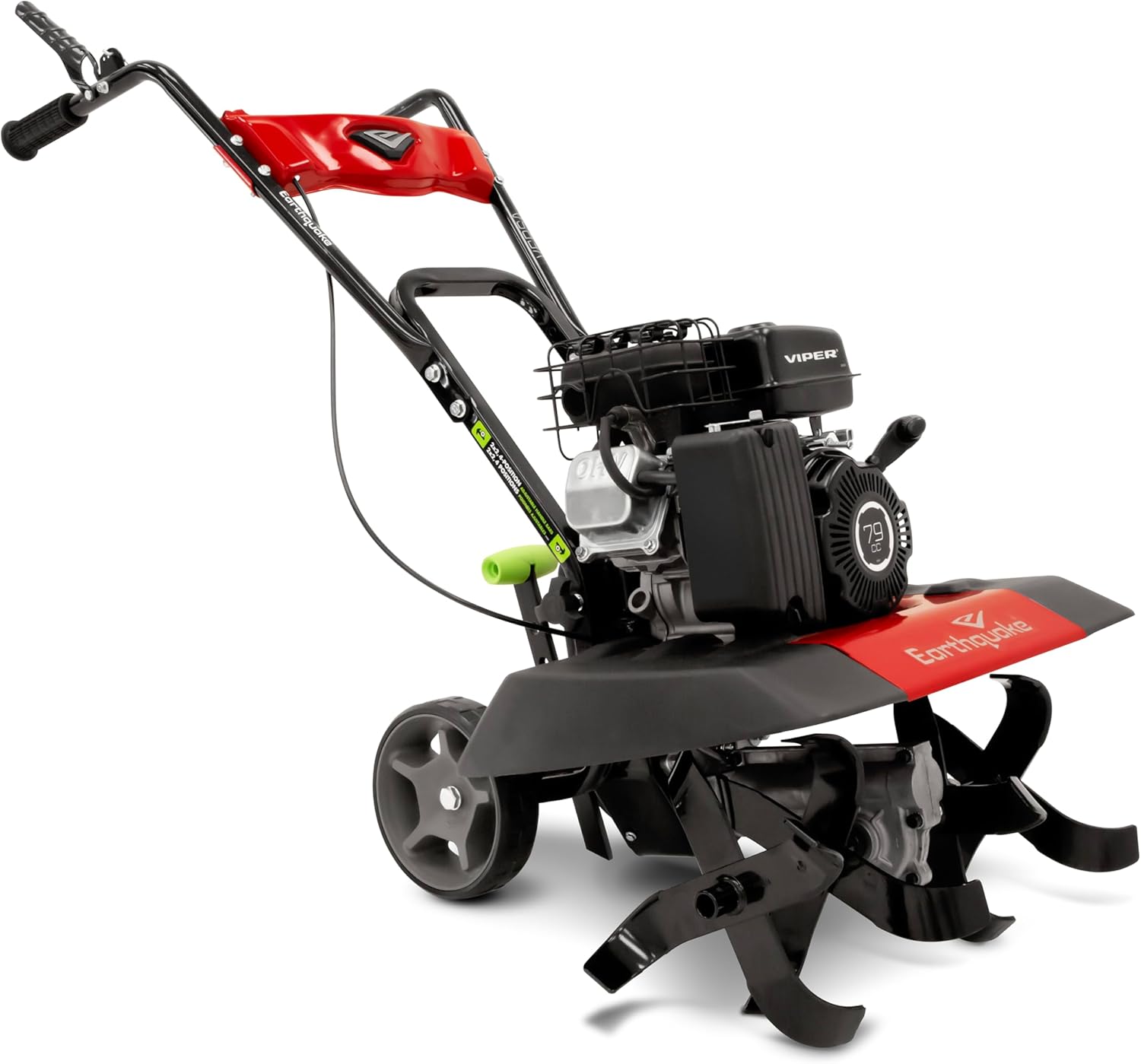 4. Earthquake Versa 24734 Front-Tine Tiller |
79cc gas · front tine11, 16 or 21 in; up to 11 in deep | Best for mixed new and established beds | Check on Amazon |
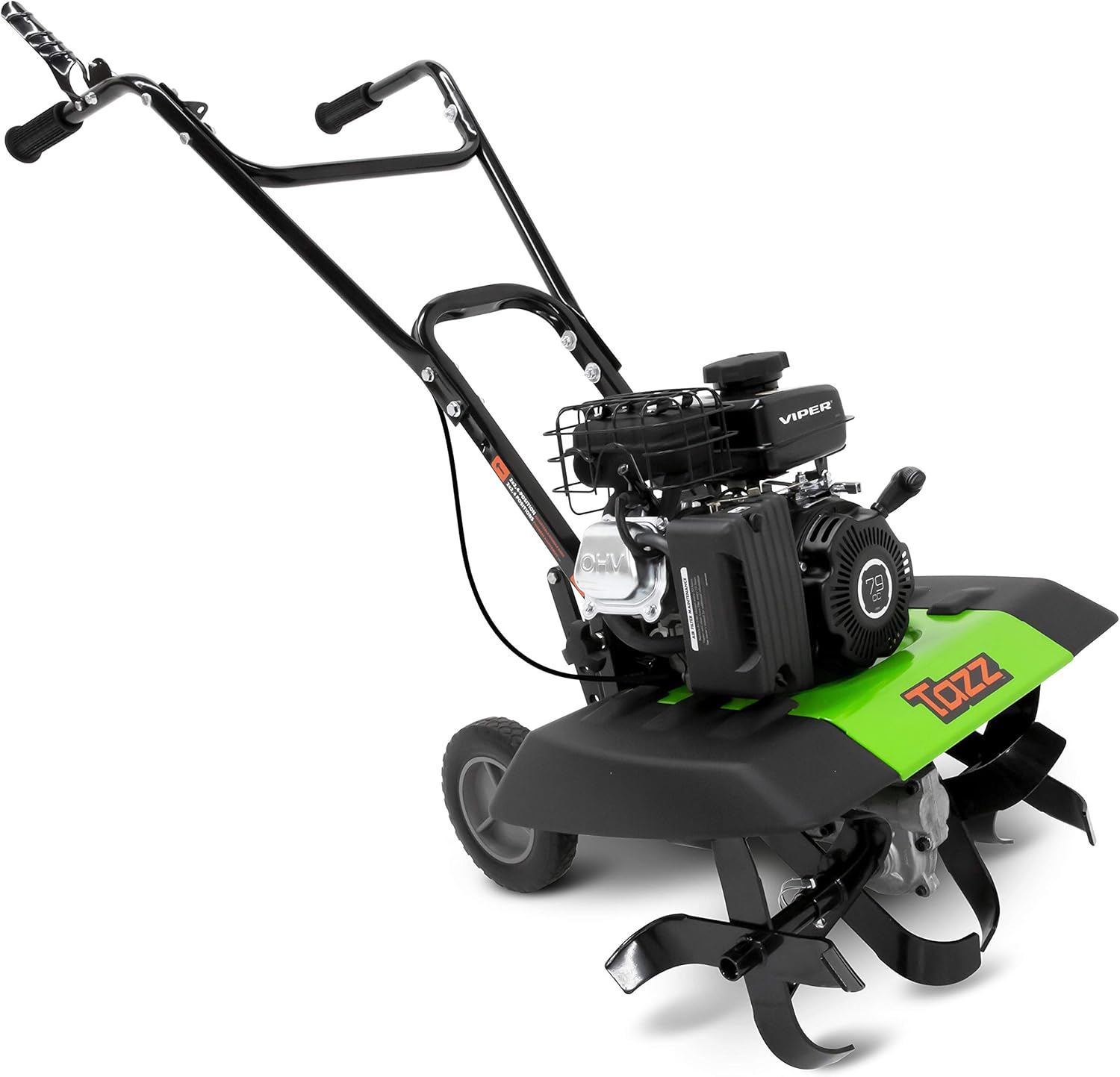 5. Tazz 35310 Two-in-One Front-Tine Tiller |
79cc gas · front tine11, 16 or 21 in adjustable | Best for smaller gas-powered bed prep | Check on Amazon |
 6. Westinghouse W18TCAC Corded Electric Tiller |
15A corded electric18 in; up to 8.7 in deep | Best for reachable, reasonably workable soil | Check on Amazon |
 7. Sun Joe TJ604E 16-Inch Electric Tiller |
13.5A corded electric16 in; up to 8 in deep | Best value for smaller prepared garden plots | Check on Amazon |
 8. LawnMaster TE1318M 18-Inch Electric Tiller |
13.5A corded electric18 in working width | Best for broad, accessible prepared beds | Check on Amazon |
 9. Greenworks Pro 80V TL80L210 Cultivator Kit |
80V battery · cultivator10 in; up to 5 in deep | Best for cordless upkeep—not sod removal | Check on Amazon |
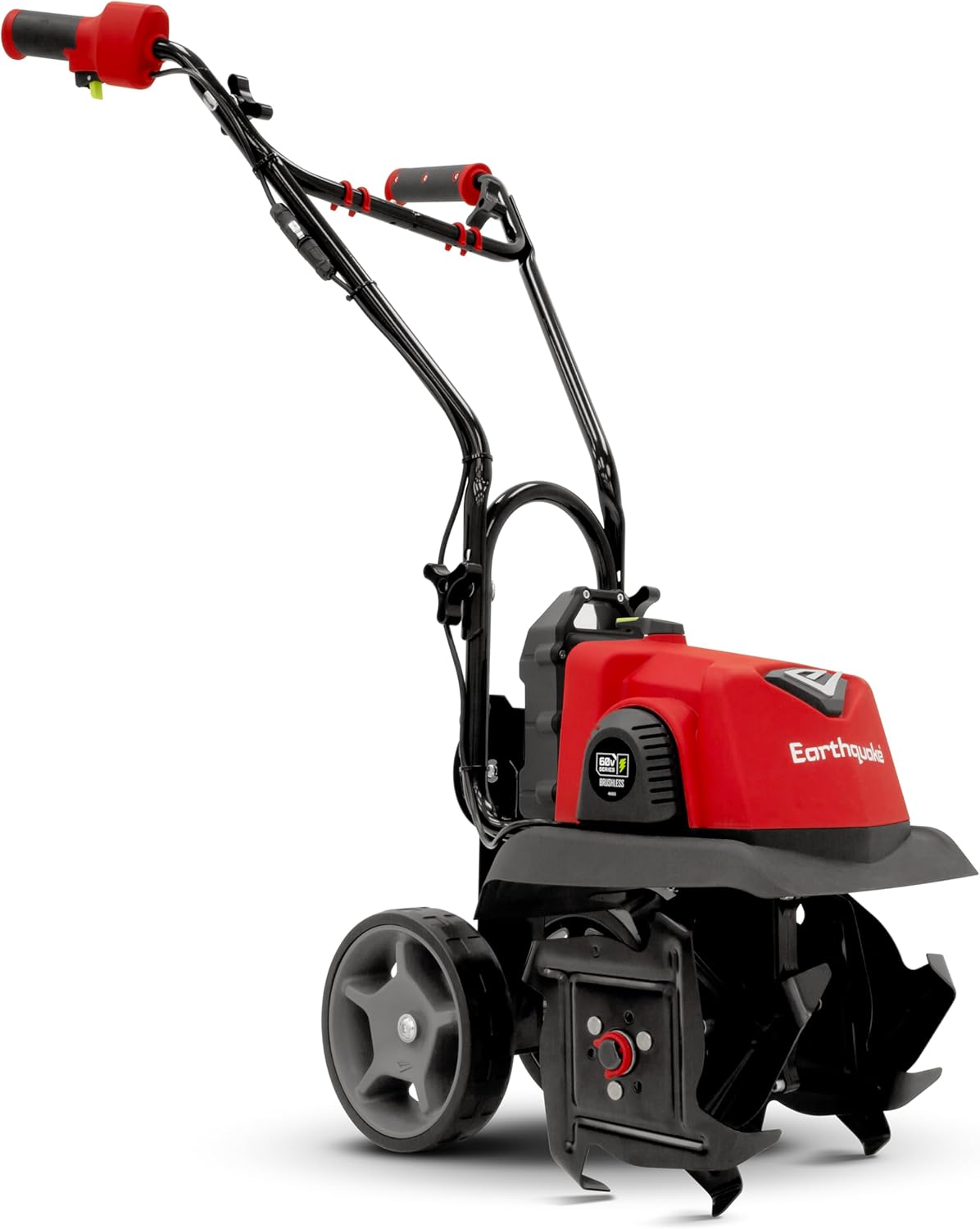 10. Earthquake 46091 60V Battery Cultivator |
60V battery · cultivator6 or 10 in adjustable | Best for narrow rows after first tilling | Check on Amazon |
10 Tillers and Cultivators Compared
1. Earthquake Victory 39381 Rear-Tine Tiller
Best for: Best overall for new ground
Published working size: 16 in; up to 10 in deep
Ground suitability: Untouched sod / hard clay
The Victory earns the first spot because it uses counter-rotating rear tines rather than relying on a lightweight front-mounted rotor to pull itself through hard ground. The 209cc Viper engine, 16-inch published tilling width, up-to-10-inch depth and instant reverse make it a more credible starting point for turning a new vegetable plot than the small electric machines below. A relatively narrow working width is also easier to position around a future garden border. The trade-off is a heavy gas machine with engine upkeep, storage requirements and a substantial upfront price. If you are opening one small bed once, compare a one-day rental against owning this model. Do not expect it to make rocks or buried roots safe to strike.
2. YARDMAX YT4565 Dual-Rotating Rear-Tine Tiller
Best for: Best for a larger new vegetable plot
Published working size: 18 in; up to 6.5 in deep
Ground suitability: Large new beds / dense soil
Choose the YARDMAX if you expect to open a wider garden and then till it periodically. Its 18-inch rear-tine layout covers more width per pass than the 16-inch Earthquake Victory, while dual rotation gives you a choice of tine action for different stages of soil preparation. The manufacturer publishes seven depth settings and a working depth around 6.5 inches—an important contrast with models advertising a deeper maximum. That difference may matter when incorporating amendments, but width and repeatability can matter more when preparing long rows. Confirm the exact engine version on the listing: YT4565 has appeared with different engine specifications across production runs. Compared with a compact electric tiller, it demands more storage, fuel care and transportation planning.
3. Earthquake Pioneer 46059 Rear-Tine Tiller
Best for: Best for dual-direction versatility
Published working size: 17 in; up to 11 in deep
Ground suitability: New ground with varied soil
The Pioneer is worth comparing when a new plot has mixed sections—some untouched lawn and some soil that has already been loosened. The Amazon listing identifies a 127cc Briggs & Stratton four-cycle engine, 17-inch working width, dual-direction rear tines and instant reverse. The attraction is not simply its engine size: changing tine direction can help match a first pass to subsequent seedbed preparation. The published 11-inch maximum depth should not be mistaken for guaranteed depth on the first pass into clay. Check the exact model number on the order and match it to the manual, since manufacturer catalogs and listings may describe different Pioneer revisions. It is a premium choice that makes less sense for an occasional four-by-eight-foot bed.
4. Earthquake Versa 24734 Front-Tine Tiller
Best for: Best flexible gas tiller for garden beds
Published working size: 11, 16 or 21 in; up to 11 in deep
Ground suitability: Looser new soil / garden expansion
The Versa sits between a heavy rear-tine machine and a small cultivator. Its 79cc four-cycle gas engine drives front-mounted tines, while removable outer tines let you change the working width from 21 inches for an open bed to 16 or 11 inches between established rows. That flexibility is valuable if the same machine must open a modest new plot and handle seasonal maintenance. The manufacturer advertises up to 11 inches of depth, but actual progress will depend on soil moisture, roots and whether sod has been removed. Unlike the Victory, the Versa is not a dedicated counter-rotating rear-tine machine; expect more operator guidance on resistant ground. Measure garden gates before assuming a wide tiller can reach the work.
5. Tazz 35310 Two-in-One Front-Tine Tiller
Best for: Best alternative compact gas setup
Published working size: 11, 16 or 21 in adjustable
Ground suitability: Small plots / previously loosened earth
The Tazz 35310 is a direct comparison for the Earthquake Versa, not an excuse to claim two radically different machines. Both target gardeners who want one gas-powered unit for wider tilling and narrower cultivation. The Tazz is listed with a 79cc four-cycle Viper engine, forged-steel tines and 11-, 16- and 21-inch working configurations. Choose between the two by the actual delivered price, replacement-parts support, assembly package and local service rather than a generic promise of more power. For a first attempt at hard, grass-covered ground, a rear-tine rental may still be the better approach. Once sod is removed, this compact design makes more sense for making a planting bed and working amendments in.
6. Westinghouse W18TCAC Corded Electric Tiller
Best for: Best wide electric tiller for a new bed
Published working size: 18 in; up to 8.7 in deep
Ground suitability: Small-to-medium new bed after sod removal
The Westinghouse W18TCAC is the strongest electrical specification in this shortlist by listed amperage: its manual specifies a 15-amp, 120-volt motor, 18-inch working width and up-to-8.7-inch depth. That makes it a sensible candidate for opening a modest garden area once the turf and major roots are removed, particularly when you do not want a gas engine. It does not automatically equal a rear-tine machine in compacted clay; amps describe electrical input, not measured output torque in the ground. Plan a safe outdoor-rated power route before ordering, and check the manual for extension-cord limits. Compared with the Sun Joe, the extra two inches of published width may save passes on larger rectangular beds but can be less convenient in tight corners.
7. Sun Joe TJ604E 16-Inch Electric Tiller
Best for: Best electric value for small garden beds
Published working size: 16 in; up to 8 in deep
Ground suitability: Small bed / lighter clay after clearing
For a homeowner creating a small flower or vegetable bed close to an outlet, the Sun Joe TJ604E provides a more manageable alternative to a gas rear-tine tiller. Sun Joe specifies a 13.5-amp motor, 16-inch tilling width and up-to-8-inch depth. Those numbers make sense for loosening an area after grass and large roots have been removed, then refreshing it in later seasons. The 16-inch width is also easier to maneuver than a broad 21-inch gas unit along a fence or narrow planting strip. The key limitation is traction: lightweight, fast-moving tines can bounce or stall against dry packed clay and living sod. Buy it for a realistic small-garden job, not because an advertised maximum depth guarantees first-pass excavation.
8. LawnMaster TE1318M 18-Inch Electric Tiller
Best for: Best wider corded alternative
Published working size: 18 in working width
Ground suitability: Medium beds / regular seasonal turning
The LawnMaster TE1318M is a direct alternative to the Sun Joe for gardeners who prioritize working width over the smallest footprint. Its Amazon listing specifies a 13.5-amp electric motor and an 18-inch configuration. That two-inch increase may matter across a long rectangular plot, provided the outside width still clears gates and raised-bed borders. The TE1318 model family has also offered configurations with removable tines, so check the exact manual shipped with your purchase before assuming a narrower setup is included. Do not read the 18-inch number as proof it will cut dense turf better than a 16-inch competitor; soil moisture, tine geometry and how easily the machine is controlled matter. For large uncompromising sod, it remains a secondary option to a rear-tine tiller.
9. Greenworks Pro 80V TL80L210 Cultivator Kit
Best for: Best cordless choice for established beds
Published working size: 10 in; up to 5 in deep
Ground suitability: Already prepared small beds
The Greenworks Pro 80V TL80L210 is included to clarify a common buying mistake: a cordless cultivator is not necessarily a tool for breaking a new lawn. This 10-inch-width, up-to-5-inch-depth machine is better suited to loosening soil between rows, incorporating compost and refreshing beds that were opened with heavier equipment. The listing includes a battery-and-charger kit; verify that exact package if comparing prices against tool-only versions. Its chief advantage is freedom from a trailing power cord for smaller jobs, especially if you already use compatible 80V tools. Its chief limitation is the job class itself: do not expect it to chew through intact sod or deep-rooted clay like the rear-tine units at the top of the chart. Check battery storage and replacement costs.
10. Earthquake 46091 60V Battery Cultivator
Best for: Best adjustable-width cordless cultivator
Published working size: 6 or 10 in adjustable
Ground suitability: Narrow planted beds / maintenance
The Earthquake 46091 makes more sense as the second machine for a garden that has already been broken open than as a stand-alone sod cutter. The manufacturer specifies removable outer tines for a 10-inch working width or a narrower 6-inch setting, with transport wheels and a variable-speed trigger. Those details matter once plants are growing: the narrower setup can work near rows without taking an 18-inch swath every pass. The matching Amazon listing includes a 60V 4Ah battery and charger, but confirm the precise bundle at checkout. Compare the battery system and long-term replacement cost with Greenworks before deciding. For a first pass across dry, compacted turf, select a true tiller instead; this is a cultivation tool.
How to Choose a Tiller for Breaking New Ground
Start with the soil, not the motor rating
Fresh sod is anchored by a dense root mat. Dry clay resists tine entry; rocky ground can damage both tools and people. A gas rear-tine tiller uses powered wheels and rear-mounted rotating tines to better manage demanding first passes, while front-tine machines tend to need more operator control when soil grabs the tines. Before shopping, dig a small test patch with a shovel and look for roots, rocks, compaction and drainage problems. Do not till saturated soil—it can smear and compact as it dries.
Compare actual tine placement and published depth
For a gas tiller for a new vegetable garden, decide whether you need rear-tine counter-rotation, dual-direction settings or a front-tine machine. Advertised maximum depth is a setting or capability, not proof of one-pass performance. In these listings, for example, the Victory advertises up to 10 inches, while YARDMAX publishes an 18-inch width with approximately 6.5 inches of working depth. Wider is not automatically better for a narrow garden gate or tight raised-bed approach.
Consider the full cost of a one-time conversion
For a single 12-by-16-foot grass plot, renting a powerful rear-tine model for the initial conversion may cost less than buying, storing and servicing it. Then use a smaller tiller or cultivate by hand for maintenance. For a recurring 20-by-40-foot vegetable plot, ownership may be more reasonable. Compare delivery, assembly, storage footprint, protective equipment, replacement tines, fuel or battery costs and return freight—not just the listed machine price.
Set up a safe work area
Locate underground utilities before digging, remove branches and large surface rocks, follow your machine’s safety manual and wear appropriate eye and foot protection. Keep children, pets and bystanders clear. On corded models, use a properly rated outdoor outlet and extension cord only as permitted in the manual; route the cord behind the tool, away from tines. Stop the engine or disconnect power before clearing tangled roots or debris.
One practical buying tip
Measure and mark the whole job first. Record plot dimensions, gate opening, distance from an outlet, where the turf and stones will go, and whether the soil has been worked before. If your project is intact sod plus hard clay, do not buy a small cordless cultivator solely because its listing says “tiller.”
Frequently Asked Questions
What is the best tiller for breaking new ground with grass?
A counter-rotating rear-tine tiller such as the Earthquake Victory is a sensible starting category for intact grass and dense soil. Remove obvious obstacles and work in manageable passes. A rental may be more economical for one plot.
Should I use a rear-tine or front-tine tiller for clay?
Rear-tine models generally offer better control and digging capability for hard, new clay. Front-tine machines fit smaller, workable areas and are useful again after the first deep turning. Avoid working clay while it is sticky and saturated.
Can a corded electric tiller break sod?
It may loosen a small, thinly rooted area in suitable conditions, but it is not as dependable as a rear-tine machine for dense living turf. Strip sod and major roots first if you are buying a corded electric tiller for a small new garden bed.
How deep should I till a new vegetable bed?
Follow the needs of the crop and the actual soil profile rather than always seeking the machine’s maximum depth. Break and amend soil without damaging buried irrigation, cables or drainage. Some beds benefit more from compost and surface protection than repeated deep cultivation.
Is a battery-powered cultivator a replacement for a rototiller?
Usually not for first-pass ground breaking. Models like the Greenworks 80V and Earthquake 60V are most useful for shallow, targeted loosening and maintenance in soil that has already been opened.
Should I buy or rent a rear-tine garden tiller?
Rent if you are converting one plot and expect to do shallow seasonal maintenance afterward. Consider buying if you prepare larger new beds regularly and have space to store, service and transport the machine.
How This Comparison Was Researched
We compared the named Amazon catalog listings and product images with published manufacturer specifications, focusing on tine placement, working width, power source and the practical difference between first-pass tilling and later cultivation. A listed product does not establish that every seller or variation is continuously in stock. No instrumented soil test, noise measurement or durability trial was performed by SizeThemUp.
Specification references: Earthquake Victory 39381; YARDMAX YT4565; Earthquake Versa; Sun Joe TJ604E; Greenworks 80V. The exact package and model should always be checked against the seller listing and model manual.
More garden equipment research: the cordless leaf blower comparison covers cleanup after trimming and cutting the surrounding lawn; a tiller and a blower serve separate purposes.
Final Verdict: Which Tiller Should You Choose?
For the main buying-intent question—what tiller should I buy to break new ground?—start with the Earthquake Victory 39381 if the site is intact sod or compacted soil and you expect to repeat the job. Compare the YARDMAX YT4565 when wider passes over a larger plot matter. The Earthquake Versa is the flexible front-tine option for smaller, more workable ground. After the grass and major roots are cleared, the Westinghouse W18TCAC and Sun Joe TJ604E become sensible electric choices for accessible small gardens.
For later maintenance, choose a cordless cultivator only when you truly need one. If this is a single difficult sod-removal project, renting a heavy rear-tine tiller and then buying a compact maintenance tool can be the better use of your budget. Check the exact product configuration, availability and return policy before ordering.