Tents for Heavy Rain: Weather Protection and Camping Fit
A camping tent can withstand a shower and still be the wrong shelter for your trip. The rainfly might stop short of the door, an oversized footprint could collect water beneath the floor, or a nominal four-person sleeping area may leave no room for wet boots and bags. These are problems of weather protection and camping fit, not simply the brand name or the waterproof number printed on the packaging. This guide explains how to inspect a tent’s rainfly, floor, seams, ventilation and actual usable space before heading into wet conditions. It also shows you how to pitch and troubleshoot a shelter when rain arrives. For a comparison of ten specific tents and Amazon product options, see our separate tents for heavy rain buying guide; this article focuses on how to make your own choice and use the tent correctly.
Jump to: weather protection features · design checklist · actual tent fit · rain setup · troubleshooting · FAQ.
The Five Features That Determine Rain Protection
1. Rainfly length and coverage
A fly that reaches toward the lower tent walls provides a second barrier between wind-driven rain and the sleeping compartment. A short roof-cap fly may work for sheltered summer campsites, but leaves more wall fabric and sometimes the entrance exposed when rain blows sideways. For a tent with full rainfly coverage, check the door and zipper protection as well as the sides: an unprotected doorway can admit water each time someone enters. A vestibule can shield footwear from above but might not have a sealed floor. It should never be described as a guaranteed dry room.
2. Floor shape and seam construction
A bathtub floor raises the floor-to-wall seam above the surrounding ground so the lowest stitching does not sit directly in surface moisture. Inspect the floor fabric for abrasion or punctures and look for factory-taped seams or a stated sealing procedure. Some coated fabrics need compatible seam sealers; a product intended for one coating type may not bond to another. A manufacturer-quoted waterproof fabric rating is measured on material under test conditions and does not establish the waterproofness of the fully pitched tent, especially its zippers, openings and seams.
3. Vestibules and protected entry
On a rainy camping trip, think through the path from muddy ground to the sleeping pad. A well-designed vestibule lets you take off wet shoes and manage a backpack before opening the sleeping area. Two doors can help two campers avoid climbing over one another with damp clothing, while a big screen room may be comfortable in dry weather but vulnerable to blowing rain. Compare actual protected storage area instead of counting porches as sleeping space.
4. Ventilation and fabric separation
Double-wall tents create space between the inner canopy and outer fly, which helps manage moisture when correctly pitched. Warm air from breathing, clothing or wet ground can condense on cooler fly fabric. When the inner tent or a sleeping bag touches the wet outer layer, moisture becomes easier to transfer. Keep permitted vents open and the fly tensioned according to the maker’s directions. A closed tent can still collect condensation even if its coatings and seams are intact.
5. Pole geometry, anchors and usable room
Tall cabin walls give adults room to stand, but present a broad surface to gusts. Lower domes can be more manageable when wind is expected, though proper stakes and guylines remain essential. Check the dimensions at the floor and above sleeping-pad height, not merely the peak height. A nominal four-person tent may accommodate four narrow pads but provide little clearance for jackets, packs, pets or a rain-safe path to the exit. Neither pole strength nor marketing language makes a tent suitable for every storm.
Rain Protection and Camping Fit Checklist
Use this quick comparison when weighing different shelter styles. The rows describe general design tradeoffs rather than ratings of a specific model.
| Design | What usually helps | What to inspect carefully |
|---|---|---|
| Low backpacking dome | Manageable pitch, separate rainfly and vestibule | Two-person floor width, condensation gap, weight and door coverage |
| Two-door double wall | Independent exits and wet-gear storage on each side | Fly tension, actual vestibule space and exact fabric variant |
| Full-fly family dome | Longer wall coverage, protected entry and generous floor | Packed size, staking needs and real mattress footprint |
| Instant cabin | Fast frame assembly and standing room | Whether the specific model includes a full rainfly and adequate anchors |
| Budget roof-cap dome | Low cost and simple shelter for occasional showers | Exposed walls, doorway runoff and lack of a gear vestibule |
How to Calculate Real Tent Fit
Start with your largest sleeping item
Record the actual dimensions of your sleeping pads or inflatable mattresses, including built-in pillows, raised edges and their inflation shape. Add enough room to enter and exit without stepping on another person’s bedding. Then plan space for bags or a vestibule outside the sleeping area. Four labels reading “four-person” do not tell you whether four thick pads can fit, and tapered backpacking floors may be narrower near the feet.
Distinguish peak height from standing room
The peak height may exist only under a small section of the roof. Sloped walls can limit usable shoulder and changing room, while a cabin has more width up high at the cost of a larger shape in wind. If you need to change rain gear while standing, examine wall height and pole geometry, not just the tallest published number. Also check whether rainfly doors provide enough covered space to enter without brushing the inner tent with wet clothing.
Measure the camping pad and the campsite
A footprint that exactly matches the tent floor or sits slightly inside its edge can protect against abrasion. One that projects beyond the outer floor can act like a rain collector. On managed campsites, also account for the full pitched area: vestibules and guylines extend beyond the inner floor. Do not pitch in a runoff channel simply because the tent itself fits there. REI’s footprint advice discusses the sizing issue.
A Practical Wet-Weather Setup Sequence
For a detailed pitch sequence and advice on site choice, see REI’s tent setup guide.
Wet Tent Troubleshooting: Leak or Condensation?
Water appears under the sleeping pads
Check first: site drainage, trapped water below the floor, an oversized footprint or a puncture. Move to a safer site when needed and allow the tent to dry before inspecting the floor. Never try to remain in a site where runoff is increasing just to protect the gear.
Droplets form across the inside of the fly
Check first: condensation. It often appears on a broad cold surface when humid air from sleepers meets that surface. Reopen protected vents, separate gear from the walls and adjust fly tension. Condensation may persist in saturated weather even when the tent is intact. REI explains the mechanisms in its tent condensation guide.
Water drips from one seam or zipper
Check first: a specific opening, seam tape, zipper flap or loose guyline. Note where the leak occurs and examine it after the shelter dries. Replace damaged seam tape or apply an appropriate manufacturer-recommended treatment for the fabric. Avoid assuming that one universal waterproofing spray will fix a damaged coating.
A vestibule is wet despite the fly
Check first: whether the vestibule has a sealed floor. Many do not. Use suitable water-resistant storage and keep bags off the soil. Screen rooms should not automatically be counted as dry storage in driving rain.
Wet fabric smells musty after a trip
Check first: whether the tent was packed damp. Air it out fully, clean according to manufacturer guidance and inspect coatings and seams before storage. Long-term moisture can damage fabrics and coatings. The REI tent care guide covers maintenance and drying.
Frequently Asked Questions
Does a higher millimeter waterproof rating guarantee a dry tent?
No. Laboratory fabric ratings do not describe every doorway, seam, floor puncture or pitching mistake. Check how the entire tent handles rain, and do not equate the floor rating with the fly rating.
Should I use an extra tarp underneath?
Use only an appropriately sized groundsheet and keep it within the floor perimeter. Exposed edges can channel water underneath. Follow the tent maker’s footprint advice.
Can I use a six-person tent for six adults and luggage?
Not necessarily comfortably. Compare all sleeping-pad widths and actual floor dimensions, then reserve room for bags and exits. A six-person label may describe closely packed sleepers rather than generous living space.
Will closing every vent keep me drier?
Usually not. Moisture from occupants can condense on cooler fabric when ventilation is inadequate. Keep protected vents open as the manufacturer’s instructions and weather permit.
How can I tell if the rainfly needs maintenance?
Look for peeling coatings, separated seam tape, damaged stitching and areas where wetting is no longer managed as designed. Clean and repair the appropriate material with products recommended for that particular fabric; see the REI waterproofing guide.
Is a tent safe during a thunderstorm?
No. According to the National Weather Service, tents do not provide lightning protection. When thunder threatens, seek a substantial building or fully enclosed hard-topped vehicle and heed local forecasts and safety instructions.
Choosing a Tent After You Know Your Fit and Weather Needs
If your trip involves long approaches, choose a manageable packed weight and make sure the sleeping compartment really fits your pads. For car camping, focus on the correct full-fly version, accessible covered entry and comfortable floor area rather than maximum capacity. If your main concern is keeping wet boots and packs outside the inner tent, favor a legitimate vestibule over a decorative porch. For specific models, verified dimensions and individual pros and cons, read our heavy-rain tent comparison. Other useful planning resources include our hiking backpacks for toddlers and beginner kayaks guide for other trips where weather and fit affect comfort.
Sources and Image Credit
Practical guidance draws on REI: How to Set Up a Tent, REI: Preventing Tent Condensation, REI: Tent Footprints, REI: Tent Care, and NWS: Lightning Safety Outdoors. This article explains methods and tradeoffs; it does not claim that the author has personally tested any named tent or that a tent is safe in extreme weather.
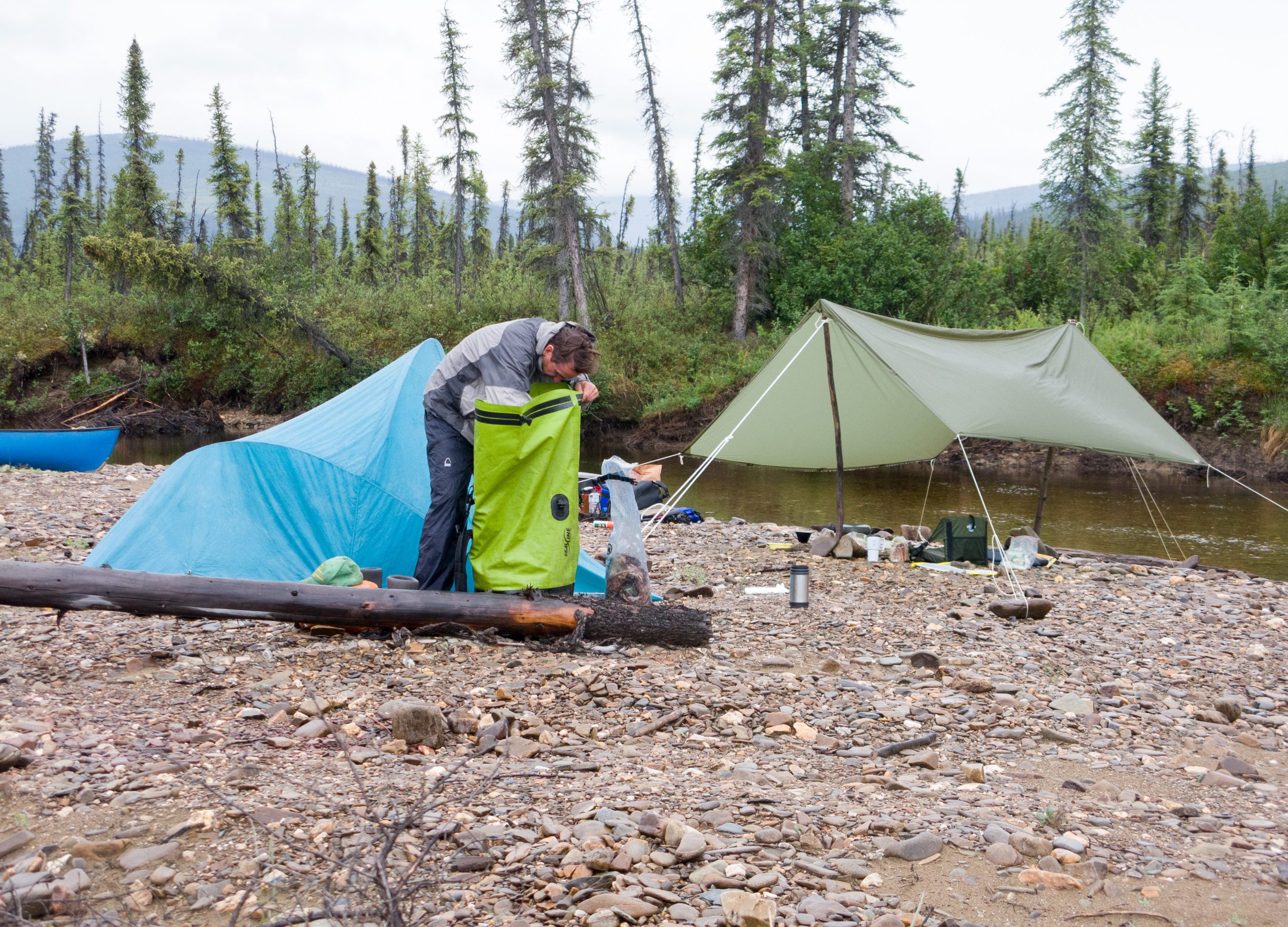
Featured editorial photograph: rainy camp near Birch Creek, Alaska, by Craig McCaa / BLM Alaska via Wikimedia Commons, CC BY 2.0. Unmodified and not an endorsement of any product.
As an Amazon Associate, Size Them Up earns from qualifying purchases.