Buying a home meat slicer is less about chasing the biggest motor and more about making delicious sandwich slices without turning cleanup into a chore. Compact models fit occasional deli-style lunches; larger machines can accommodate batch preparation but occupy much more counter space. This guide compares ten electric slicers by blade format, use case, maintenance and realistic ownership tradeoffs. It also explains how to choose a home meat slicer for thin deli meat without assuming that every slicer handles frozen food or hard cheese.
Quick picks: Cuisinart FS-75 for everyday kitchen use, BESWOOD 10-inch for a heavier-duty workspace, Elite Gourmet for occasional use, and Weston for batch prep.
How we selected these home meat slicers
We reviewed product formats, manufacturer-described features and practical ownership considerations, based on product-format information and practical ownership considerations. We have not conducted hands-on slicing tests. Confirm that the retailer listing matches the model shown, because product offerings can change. Check model identity, price, stock, accessories and appropriate foods on the seller page and in the manufacturer’s manual before purchasing.
Meat slicers for home use compared
Buying tip: Before choosing by blade size, make sure the machine’s food carriage fits what you actually slice and that you can safely clean its blade and guard.
1. Chef’sChoice 609A Electric Food Slicer — Compact home slicing
Check the latest price on Amazon
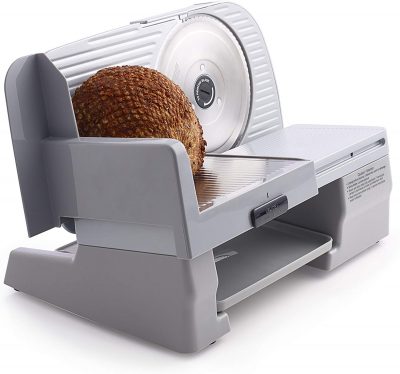
The Chef’sChoice 609A is a sensible starting point for a household that wants to slice cooked roast beef, turkey, or other chilled deli-style foods occasionally. Compared with a large commercial machine, this style emphasizes a manageable footprint and a food carriage that helps guide ingredients past the blade. Look for the manufacturer’s current cleaning and carriage-removal instructions, since easy cleanup matters as much as cutting performance when a slicer comes out only once a week. A sharp rotating blade needs an attentive adult operator, a proper food pusher, and a stable counter. Confirm your chosen listing is really the 609A rather than a newer or visually similar Chef’sChoice model. This type is most appealing when a small kitchen cannot accommodate a ten-inch slicer permanently.
Blade category: 7-inch class. Best use: Occasional home use. Check the specific retailer listing and latest manual for current details.
2. VEVOR 10-inch Commercial-Style Deli Slicer — Larger slicing jobs
Check the latest price on Amazon
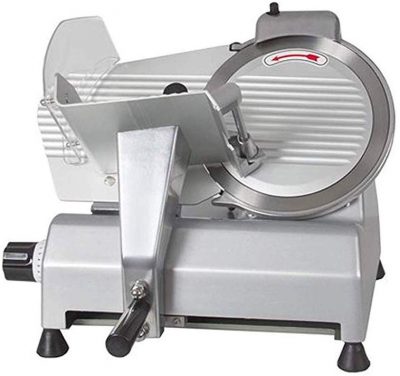
A ten-inch VEVOR deli slicer targets people processing larger cooked roasts or preparing several pounds of lunch meat at a time. The appeal of a bigger blade is room for larger food pieces, but do not assume its advertised motor wattage alone reveals slice quality or safe continuous runtime. Commercial-style slicers can demand a dedicated counter, careful assembly, and more detailed sanitizing around the blade guard and carriage. Buyers should verify the exact model suffix because VEVOR sells multiple machines with similar appearance and different blades and sharpening arrangements. A larger slicer is not automatically better for a household that makes just a few sandwiches. Evaluate its weight, cleaning access, blade guarding, and local service support before paying extra for the heavy-duty format.
Blade category: 10-inch class. Best use: Frequent batch preparation. Check the specific retailer listing and latest manual for current details.
3. Cuisinart FS-75 Kitchen Pro Food Slicer — Everyday deli-style use

Check the latest price on Amazon
Cuisinart’s FS-75 is a recognizable home-kitchen format for someone who wants to make sandwich slices without dedicating a large permanent station to the machine. A seven-and-a-half-inch blade is a practical middle ground for portions of cooked meat, some breads, and suitable firm foods, provided the current manual permits them. When comparing home slicers, look beyond the motor rating: a food pusher that feels secure and components that are accessible for cleaning can make a bigger difference after repeated use. Take note of the dimensions when stored, not just when the carriage is centered. Confirm the current FS-75 listing and its supplied blade and food-handling instructions before ordering. Do not use any meat slicer for foods that the manufacturer excludes.
Blade category: 7.5 inches. Best use: Sandwiches and occasional prep. Check the specific retailer listing and latest manual for current details.
4. Compact Slicer with Safety Lock and 7.5-inch Blade — Safety-minded compact choice
Check the latest price on Amazon
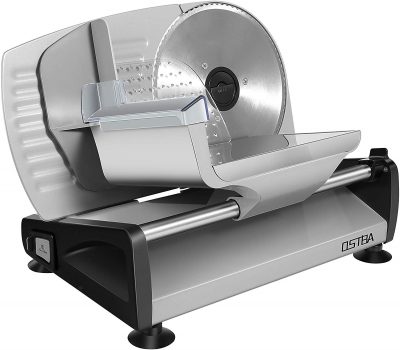
A compact 7.5-inch electric slicer with a safety-lock control offers a useful feature set for occasional home slicing. A lockout feature can be useful where a kitchen appliance is stored around children, but it is never a substitute for unplugging the machine and keeping access restricted. Because the specific brand-and-model combination needs confirmation, shoppers should be especially careful to compare the specific machine currently linked with its photographs, instructions, blade dimensions, and seller support. A compact unit can be appealing for occasional cooked deli-meat preparation, especially when storage is tight. Look for a stable food pusher, understandable thickness adjustment, and simple cleaning access. Until the seller’s current model is independently confirmed, treat this entry as a feature-based comparison rather than a firm endorsement of a particular current offer.
Blade category: 7.5 inches. Best use: Occasional home use. Check the specific retailer listing and latest manual for current details.
5. BESWOOD 10-inch Premium Meat Slicer — Heavy-duty home upgrade
Check the latest price on Amazon
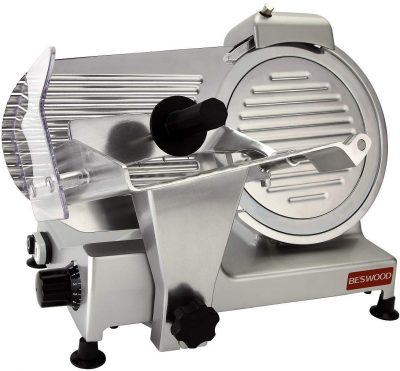
The BESWOOD 10-inch premium slicer is aimed at serious home cooks who routinely process substantial cooked roasts, cheese permitted by the maker, or meat for larger gatherings. Its commercial-style construction and sizeable blade are useful when a smaller household unit’s carriage feels restrictive. That capability comes with tradeoffs: bulk, weight, space around the carriage, and the care needed to clean safely around a sharp ten-inch blade. Some BESWOOD 250 variants include integrated sharpening components, but model naming and blade finish should be checked against the exact current product. For buyers with a dedicated prep area, the size may be worthwhile; someone slicing turkey only twice a month may prefer a lighter machine. Check the manual’s maintenance and intended foods before selecting it.
Blade category: 10 inches. Best use: Frequent slicing and larger cuts. Check the specific retailer listing and latest manual for current details.
6. Elite Gourmet EMT-625B Meat Slicer — Value-oriented household option
Check the latest price on Amazon
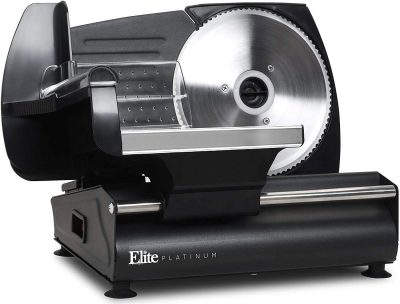
The Elite Gourmet EMT-625B is a familiar compact electric deli slicer designed for consumers who want more consistency than careful hand-cutting can easily provide. The useful decision points are whether it supports your typical cooked meat or bread portions, how easily the blade assembly can be cleaned, and whether the suction or grip feet stay secure on your countertop. A modest household model may be easier to store than a restaurant-style machine, but smaller motors and carriages impose practical limits. Check the specific instruction booklet for allowed foods, duty cycle and cleaning procedures instead of assuming it will process frozen meat or hard cheeses. Consider the complete weight and dimensions as well as the headline blade size if you plan to put it away after each use.
Blade category: 7.5 inches. Best use: Light-to-moderate use. Check the specific retailer listing and latest manual for current details.
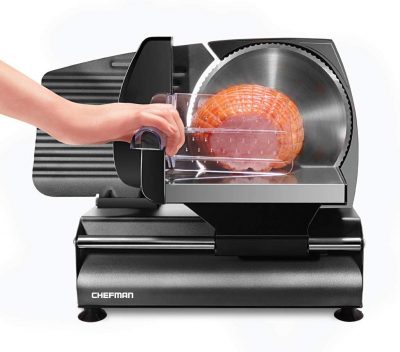
7. Chefman Die-Cast Electric Meat Slicer — Small kitchens and first-time users
Check the latest price on Amazon
A compact Chefman slicer may suit someone who is trying a home deli station for the first time. Its appeal is straightforward thickness adjustment and a form factor intended for countertop use, rather than commercial-scale processing. Cleaning convenience is particularly important for sliced meats: unplug before disassembly, follow the instructions closely, and sanitize food-contact surfaces after use. When comparing this model with Cuisinart or Elite Gourmet, check whether the currently sold Chefman package includes the appropriate blade profile and carriage accessories. Some foods require a specific blade type and pressure technique, so never force ingredients through the machine. A comfortable food pusher and stable base are more valuable than an unsupported promise of perfectly paper-thin slices every time.
Blade category: 7.5 inches. Best use: Occasional sandwich preparation. Check the specific retailer listing and latest manual for current details.
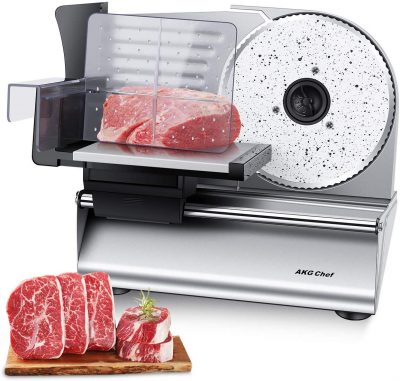
8. AKG Chef 7.5-inch Electric Food Slicer — Compact alternative with uncertain availability
Check the latest price on Amazon
The AKG Chef slicer is a compact 7.5-inch option, but confirm current retail availability and manufacturer support. Before treating it as a current buying recommendation, check the exact retailer listing and whether the manufacturer still supplies replacement blades, guards, and operating instructions. Product descriptions of ceramic-coated blades and easy cleaning should be checked against the manufacturer’s current specifications. As a format, a small electric slicer can be handy for cooked deli meat and suitable firm foods when a kitchen lacks space for a heavy machine. The real ownership questions are how easily its food-contact components are disassembled, whether cleaning materials are still supported, and how safely the carriage handles a smaller piece of food. If current support is weak, prefer a better-documented alternative.
Blade category: 7.5 inches. Best use: Basic occasional slicing. Check the specific retailer listing and latest manual for current details.
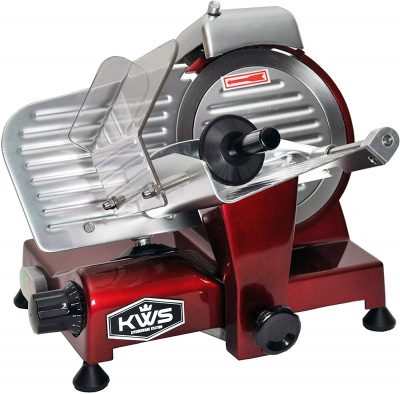
9. KWS MS-6RS Electric Meat Slicer — Specialty smaller-blade model
Check the latest price on Amazon
The KWS MS-6RS uses a smaller blade format than the more common seven-and-a-half- or ten-inch slicers. That can make it a distinctive comparison for shoppers with a specific food-preparation workflow, but blade diameter alone should not be interpreted as proof that a machine can safely process frozen meat. Descriptions of this model mention a 200-watt motor and integrated sharpening arrangement; verify current technical literature and seller details because equipment can change. Smaller blade machines still require rigorous attention around the cutting edge, pusher and carriage. If you regularly slice large roasts, the usable carriage opening may be a better indicator of suitability than the printed power rating. Carefully confirm blade replacement and cleaning instructions before buying a specialty unit.
Blade category: 6 inches. Best use: Smaller specialty portions. Check the specific retailer listing and latest manual for current details.
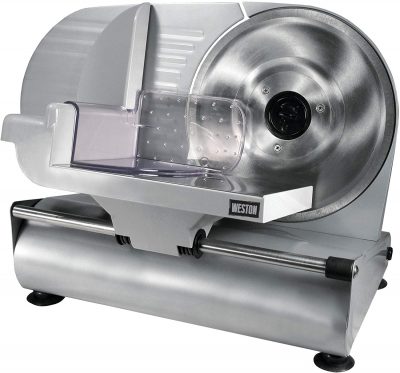
10. Weston 61-0901-W Heavy-Duty Food Slicer — Meat preparation and batch cooking
Check the latest price on Amazon
The Weston 61-0901-W belongs to the larger home meat-slicer category and can appeal to people who routinely prepare batches of cooked meat for freezing, lunches, or gatherings. Its nine-inch format gives it a different footprint from compact seven-and-a-half-inch models. Product descriptions reference a belt-driven motor and stable feet, but the exact motor and accessories should be checked against the current Weston documentation rather than copied forward without confirmation. For meat preparation, the biggest considerations are safe control of the food carriage, a blade that suits the specified foods, and the ability to sanitize every contact surface thoroughly. Measure the open-carriage footprint, since a machine can require much more working space than its boxed dimensions imply. Use only foods and duty cycles permitted in the manual.
Blade category: 9 inches. Best use: Frequent home prep. Check the specific retailer listing and latest manual for current details.
How to choose the right home meat slicer
Best meat slicer for thin deli meat at home
Thin, even slices require a steady carriage, stable pressure, a blade suitable for cooked chilled meat and repeatable thickness adjustment. Focus on how securely the pusher holds smaller food pieces and how the manufacturer recommends loading the carriage. Practice with a suitable food rather than pushing harder if a slice catches. A larger blade is not inherently more precise.
Home meat slicer for jerky and batch preparation
Some home cooks choose a slicer to cut strips for jerky or portion larger cooked roasts. The key distinction is the foods and temperatures approved in the current manual. Do not feed rock-solid frozen meat into an ordinary household machine unless the manufacturer specifically states that it is designed to process it. For larger workloads, confirm the machine’s permitted operating cycle and allow safe cleaning access after each batch.
Blade diameter, motor ratings and countertop space
A compact seven-inch-class slicer usually fits a different kitchen routine from a ten-inch semi-commercial machine. Consider food-carriage dimensions, clearance for the moving tray and whether you have room to clean and store the unit. Published wattage alone does not prove slicing performance or whether a machine can safely work through dense foods. A heavy base can be stable but difficult to move.
Electric meat slicer safety and cleaning
Unplug the appliance before cleaning or making adjustments that require reaching the blade. Keep guards and the food pusher installed as directed, supervise children and never use hands to feed small ends toward the cutting edge. Follow the manual’s disassembly, handwashing and sanitizing guidance; never assume every removable blade or carriage is dishwasher safe. Thorough cleaning is crucial after handling raw or cooked meat to avoid cross-contamination.
When does a home slicer save money?
Savings depend on your real cost per pound for whole versus pre-sliced food, how much you regularly consume and how much time you spend preparing and cleaning. Avoid assuming any slicer pays for itself on a fixed schedule. Buying meat in bulk can make sense, but it also requires safe refrigeration and proper storage. Choose a model that fits your actual monthly use rather than one with the most impressive specifications.
Frequently asked questions
Can a home meat slicer cut frozen meat?
Only if its specific manual permits frozen meat. Many ordinary home slicers are not designed for fully frozen blocks; forcing them can damage the appliance and cause injuries. Follow food-handling instructions carefully.
Is a 7.5-inch or 10-inch meat slicer better for home use?
Seven-and-a-half-inch units often suit smaller kitchens and occasional slicing. Ten-inch models may accommodate larger pieces but require more space, weight tolerance and cleanup time. Compare the carriage rather than blade diameter alone.
What foods can I slice besides meat?
Some machines permit suitable bread, cheeses or vegetables. The precise approved foods depend on the blade and design, so always consult the current manufacturer’s manual instead of assuming every food is compatible.
How do I clean a meat slicer safely?
Power down and unplug it. Remove only parts the manual says are removable, protect yourself from the exposed cutting edge, then wash and sanitize food-contact parts as directed. Dry and reassemble according to the instructions.
Do I need a built-in blade sharpener?
Not necessarily for occasional home use. Follow the manufacturer’s approved sharpening method and schedule. Do not improvise near a rotating blade; professional sharpening may be appropriate for some blade designs.
Final verdict: which meat slicer fits your kitchen?
For most occasional home cooks, begin with a manageable compact model rather than a heavy commercial-style machine. Prioritize safe operation and easy cleaning over advertised power.
- Everyday home use: Cuisinart FS-75 — a practical compact format.
- Frequent, larger batches: BESWOOD 10-inch — more substantial slicing capacity if you have the space.
- Occasional use: Elite Gourmet — examine this lighter household option.
- Meat-processing workstation: Weston 9-inch — worth comparing if you prep more frequently.
Review the current product details and instructions before ordering; no specific current price or offer is guaranteed.
Product specifications, pricing and shopping links can change. This comparison is based on desk research and does not claim firsthand testing. As an Amazon Associate, SizeThemUp earns from qualifying purchases.
Featured photograph: Flavio~ / Wikimedia Commons, licensed under CC BY 2.0. Photograph used without alteration.