Best Kayaks for Beginners
Are you planning to go fishing for the first time? If yes then we will assist you by helping you chose your Kayak by introducing best Kayaks for beginners! First of all, what is a Kayak? It is basically a watercraft that is narrow and small and usually has room for one to two persons. It moves in water with the help of paddle that is double-bladed. It is different from a canoe as it usually comes with an additional feature i.e. a spray deck that makes it water-proof. Spray deck makes it convenient for the kayakers to roll the kayak without water filling inside the kayak. Kayaks are made using different materials including fiber glass and plastic. Some of the modern kayaks use electric motors or gas engines for propelling.
Now, owing to fishing still being a popular hobby, kayaks are high in demand for recreational purposes. So, they are being manufactured in a large number. Consequently, the abundance of kayaks in market makes it difficult for the beginners to choose the best one. So, in this article, we will enhance your knowledge about the best kayaks for beginners by enlisting each of kayaks pros and cons so that it becomes easier for you to choose the best one.
Best Kayaks for Beginners Comparison Chart
Compare the ten kayaks reviewed below. The Amazon buttons retain the article’s existing product links; confirm the exact model, seller, and current availability before ordering.
1. Intex Challenger K1 Kayak, 1-Person Inflatable Kayak Set with Aluminum Oars
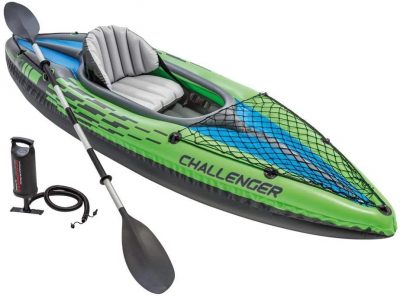
Let’s start with this agile Kayak by Intex. This colorful kayak is made up of welded material that lends it great durability. It is extremely light-weight hence agile. This makes it the best starter kayak. Its cockpit is constructed in such a way that it provides convenience and maximum space. Moreover, the inflatable i-beam floor renders it high stability. In addition to that, its seat is inflatable and it also has a backrest. The cargo net provides an easy storage space for extra gear. It comes with a hand pump, aluminum oar (84 inch), and a repair patch. Let have a look at some of the pros and cons:
2. SUNDOLPHIN Sun Dolphin Aruba 10-Foot Sit-in Kayak
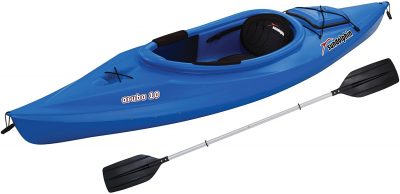
Next in the list is this extremely comfortable Kayak with its adjustable and high backrest seat that provides good support for your back while you cruise through the waters. Also, it is quite spacious so if you are 6 feet or above, that won’t be an issue with this kayak. It has a solid construction and the foot braces are also adjustable. Moreover, the spray deflector collar prevents the water from filling in the kayak. Let’s have a look at some of the pros and cons:
3. Advanced Elements AdvancedFrame Kayak
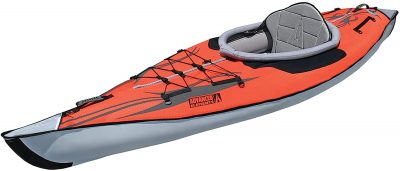
This multilayered Kayak is one of the most durable kayaks on this list. The aluminum frame in its construction renders it high stability and strength. Interestingly, this kayak looks like a hard-shelled one while allowing easy portability like an inflated one. It comes already assembled from the factory so you just have to unfold, inflate, and adjust the seat and you are good to hit the waters! Additionally, its padded seat provides high comfort for longer duration of paddling. Let’s have a look at some of the pros and cons:
4. Intex Explorer K2 Kayak, 2-Person Inflatable Kayak Set with Aluminum Oars
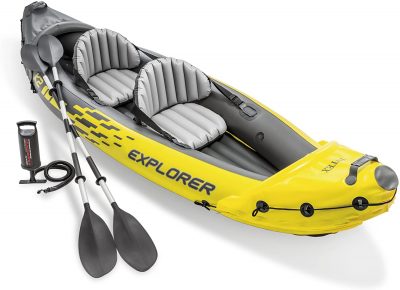
Looking for a kayak to go fishing with your partner? Here is one of the best kayaks for couples in our list. The cockpit is designed for comfortably accommodating two persons with two inflatable and adjustable seats. This kayak also has high quality puncture-resistant vinyl. Moreover, it has three separate air-chambers. Another important feature is the bright yellow color; it renders it easy visibility in case of any emergency. Here are some of the pros and cons:
5. Intex Excursion Pro Kayak, Professional Series Inflatable Fishing Kayak
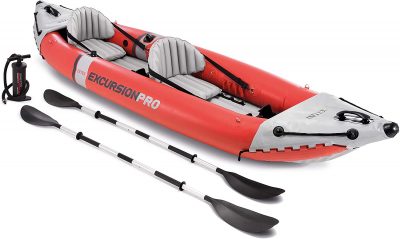
Here is another best starter kayak if you plan to go fishing with your partner or friend. This high quality kayak consists of thick lamination of PVC with polyester core. The high-pressure inflation makes it more stable than many other kayaks. The two adjustable footrest makes it spacious and convenient even if you are 6 feet and above. It also provides mounting brackets for fishing accessories.
6. Lifetime Tamarack Angler 100 Fishing Kayak
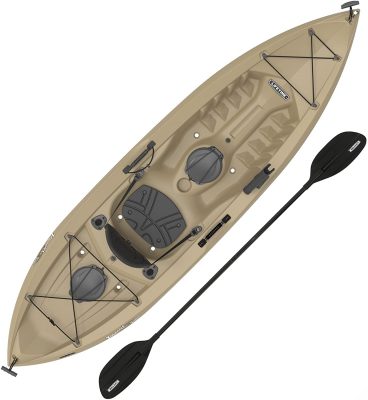
Here is another best beginner kayak for fishing that is quite popular among the beginners. This durable kayak is constructed with high-density polyethylene that renders it high durability. It is a perfect fit for all heights of people as it features multiple footrests. Moreover, its seat is padded due to which it is quite snug. The backrest, that is also padded, is adjustable so that is another plus for all heights of people. Here are some of the pros and cons:
7. Lifetime Youth Wave Kayak (Paddle Included), Blue, 6′
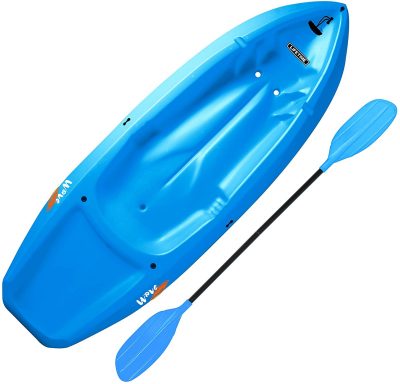
This is another kayak that is made up of high-density polyethylene. It is loved by the kids as well as beginners who weigh below 59 kg. It has an alluring blue color and it is quite stable due to reversed chine. Moreover, it is flip resistant due to its hull design. Like the previous one, this kayak also has multiple footrests. It is quite safe for the kids over the age of 5 as it has finger handles on both sides of the kayak. Let’s have a look at some of the pros and cons:
8. Pelican Sentinel 100X Angler Sit-on-Top Fishing Kayak

The Pelican Sentinel 100X Angler is a compact sit-on-top fishing kayak for paddlers who want an open deck rather than a traditional enclosed cockpit. Its approximately 9-foot-6-inch hull is intended for recreational fishing on suitable sheltered water. It features adjustable footrests, a cushioned backrest, rod storage, and an ExoPak removable storage compartment for accessible tackle. At about 44 pounds, it may be easier for some owners to transport than larger fishing kayaks, although a safe roof-loading method is still essential. The manufacturer lists a maximum load of 275 pounds; that figure includes both paddler and gear, and paddling performance can change as the boat approaches its capacity. Choose this model if your first priority is relaxed lake fishing and easy entry, not high-speed touring or exposed coastal conditions.
9. Intex Excursion Pro K1 68303EP One-Person Inflatable Kayak

The Intex Excursion Pro K1 68303EP is a one-person inflatable kayak that suits buyers who need portable storage but want more structure than a basic pool-style inflatable. The manufacturer describes a three-ply SuperTough PVC construction, an adjustable bucket-style seat, and a rigid-feeling high-pressure inflation system. The package includes a kayak paddle, pump, and carrying bag, making it practical for someone who does not own a roof rack. At roughly 10 feet long with a published 220-pound weight capacity, this solo model is best assessed with the paddler’s total gear weight in mind. It requires inflation before every outing and thorough drying afterward. It is a sensible comparison for beginner fishing and calm-water paddling when portability matters; do not confuse the K1 with the longer tandem Excursion Pro model reviewed elsewhere on this page.
10. Sevylor Quikpak K1 1-Person Kayak
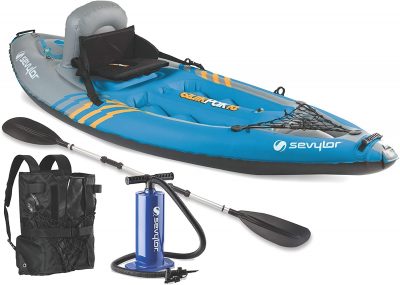
The last kayak on our list of best kayaks for beginners is Sevylor Quikpak K1. This is one of the most practical options as it is easy to pack and unpack. Its unique feature is that the easy to carry backpack becomes the seat one you set it up. Hassle? Nope, it only takes around 5 minutes to unpack it, inflate it, and set up the seat. Moreover, the high-output air pump that is included in the package inflates the kayak instantly. Its bottom is made up of tarpaulin that prevents it against punctures. Here are some of the pros and cons of this kayak:
How to Choose the Best Kayak for Beginners
Your first kayak should fit the water you plan to paddle, your body, and the way you will transport and store it. A beginner-friendly kayak is not necessarily the shortest or widest option: stability, comfort, tracking, weight capacity, and ease of re-entry all matter. Use this buying guide to narrow the choices in the comparison chart above before deciding which kayak suits your first season.
1. Start with the water, not the brand
For sheltered ponds and calm lakes, a recreational kayak with predictable handling is usually a sensible starting point. Rivers with current introduce obstacles and maneuvering demands. Coastal water adds wind, waves, tides, and changing conditions; open-water paddling requires appropriate skills, equipment, and planning. Never assume an inflatable recreational kayak or a short fishing kayak is suitable for exposed ocean conditions simply because it floats well on a calm pond.
2. Sit-inside vs. sit-on-top kayaks
Sit-inside kayaks surround your legs with a cockpit, offering some protection from splashes and wind. Cockpit size and your ability to exit safely are important. Sit-on-top kayaks have an open deck and are often easier to get on and off in warm, calm water, although paddlers generally get wetter. Fishing-oriented sit-on-top models can be roomy and stable but may be heavy to lift onto a vehicle. Consider how comfortable you feel entering and exiting the kayak at a launch area.
3. Inflatable vs. hard-shell: the real tradeoffs
An inflatable kayak is easier to store in an apartment, closet, or small car and may be convenient for occasional outings. The tradeoffs include inflation and drying time, susceptibility to damage, and sometimes less precise tracking. A rigid polyethylene kayak generally avoids setup time and can tolerate everyday bumps, but it needs storage space and a safe transportation method. For an inflatable, check the actual packed dimensions, included pump, recommended pressure, and whether the package includes a suitable paddle.
4. Length, width, stability, and tracking
Many recreational beginner kayaks are roughly 9–12 feet long, but the best size depends on the design and paddler. Wider hulls often feel steadier when sitting still, while narrower hulls may glide more efficiently. Longer hulls commonly track straighter, while shorter ones can be easier to turn and store. Stability has more than one dimension: a kayak that feels steady on flat water may behave differently when leaned or hit by waves. Evaluate the full hull design rather than choosing from a single width measurement.
5. Check capacity and cockpit fit
Read the manufacturer’s maximum load rating, then account for your weight, clothing, drinking water, safety gear, and any fishing equipment. A maximum capacity is not the same as an ideal comfortable working load; performance and freeboard can suffer as a kayak becomes heavily loaded. Taller paddlers should look at legroom, seat adjustment, and foot braces. For tandem models, confirm the total combined load and whether the seating arrangement works for two adults or an adult and child.
6. Transportation and storage
Before purchasing a hard-shell kayak, check the boat’s actual weight and whether you can lift and secure it with the help available. Confirm that your vehicle’s roof system is rated for the combined load and follow the rack and vehicle manufacturers’ tie-down instructions. A compact inflatable may be more practical if you have no garage, while a longer rigid kayak may suit someone with a nearby launch and dedicated storage space. Dry and clean your kayak before long-term storage, following its care instructions.
7. Budget for equipment beyond the kayak
The kayak price is only part of the cost. Plan for a properly fitted, U.S. Coast Guard-approved personal flotation device (PFD), a paddle of suitable length, a whistle or other required sound-signaling device, and weather-appropriate clothing. Depending on the location and conditions, you may also need a bilge pump, paddle float, navigation light, dry bag, or suitable communication device. Confirm local boating rules and the manufacturer’s included accessories rather than assuming every kayak kit contains everything you need.
8. Beginner kayaking safety checklist
- Wear a properly fitted PFD every time you paddle.
- Check wind, weather, water temperature, current, and local advisories before launching.
- Tell someone your route and expected return time; avoid paddling alone while learning.
- Practice launching, landing, and getting back to safety in controlled conditions.
- Stay near shore on early outings, and avoid cold or rough water without the appropriate training and gear.
- Keep your phone or communication device protected and accessible; know how to call for help.
Buying tip: If possible, rent or demo a kayak before purchasing. A short paddle often reveals seat discomfort, poor fit, or handling preferences that specifications alone cannot show.
Frequently Asked Questions About Beginner Kayaks
What is the best kayak length for a beginner?
For many calm-water recreational paddlers, a kayak around 9–12 feet is a reasonable range to explore. A smaller paddler with limited storage may prefer a shorter boat; someone seeking straighter tracking on longer lake trips may appreciate a longer model. Fit, weight, hull design, and intended water matter more than an exact length.
Is a sit-on-top or sit-inside kayak better for beginners?
Neither style is universally better. Sit-on-top kayaks are appealing for warm-weather outings and easy entry, while sit-inside recreational kayaks may provide a drier ride. Choose based on water conditions, personal comfort, and whether you can safely enter, exit, and recover from an unexpected capsize.
Are inflatable kayaks good for beginners?
They can be, especially for occasional trips on sheltered water and paddlers with limited storage. Compare the actual construction, weight rating, inflation procedure, included accessories, and handling. Always use the model only in conditions permitted by its manufacturer.
Can a beginner use a fishing kayak?
Yes, particularly on calm water, but fishing features can add weight and bulk. Look for a comfortable seat, stable handling, manageable carry weight, and enough room to paddle without snagging rods or other equipment. Practice paddling and safety skills before fishing from the kayak.
Do I need to know how to swim to kayak?
Kayaking carries a risk of immersion, even on calm water. Strong swimming and self-rescue skills are important; a PFD is essential but does not eliminate drowning risk. If you are not a confident swimmer, seek qualified instruction and avoid going out until you can manage the relevant water-safety skills.
What is the difference between a kayak’s maximum capacity and a comfortable load?
The manufacturer’s capacity is a limit, not a promise that the kayak will paddle comfortably at that weight. Include the paddler and all equipment in your calculations and leave a sensible margin; refer to the manufacturer’s guidance for the specific model.
Should I buy a single or tandem kayak?
A single kayak gives each paddler independent control and is usually simpler to transport. A tandem can be useful for a couple or an adult paddling with a child, but it is generally longer and heavier. Check the total load rating, seat layout, and whether the tandem is intended to be paddled solo.
Final Verdict: Which Beginner Kayak Should You Choose?
For occasional calm-water outings and limited storage, the Intex Challenger K1 is a compact inflatable option worth comparing. If two people want to paddle together, review the Intex Explorer K2 and pay close attention to combined weight and seating space. For a rigid recreational kayak, compare the Sun Dolphin Aruba with other sit-inside models that fit your paddling environment. Fishing-focused buyers can begin with the Lifetime Tamarack Angler 100, bearing in mind its size and transport requirements.
These are comparisons of the models discussed above, not a confirmation of current Amazon stock. Product availability, configurations, and included accessories change. Before purchasing, verify the exact model, current seller listing, weight rating, and accessories. A comfortable, safe fit on the water is more valuable than a long list of features.
Disclosure: As an Amazon Associate, SizeThemUp earns from qualifying purchases.