Electric Burr Coffee Grinders for Espresso, Pour-Over and Everyday Brewing
Choosing an electric burr coffee grinder is not about finding the most settings or the fanciest display. The useful question is whether a grinder suits the coffee you actually make. A nonpressurized espresso machine often requires small adjustments at the fine end, while an automatic drip brewer rewards convenient, repeatable batches. Pour-over enthusiasts may care more about the grounds cup and switching between beans than a large hopper. Even the best-looking grinder can become frustrating if it will not fit under a cabinet or if cleaning takes too long. We compare ten specific electric burr grinders for espresso, drip, pour-over and French press, with a focus on usable grind adjustments, dosing, footprint, maintenance and daily workflow. Read the comparison first, then the detailed pros and cons. If you need a compact burr coffee grinder for a small kitchen, or a versatile coffee grinder for espresso and drip brewing, the right choice begins with your brewer and usual batch size.
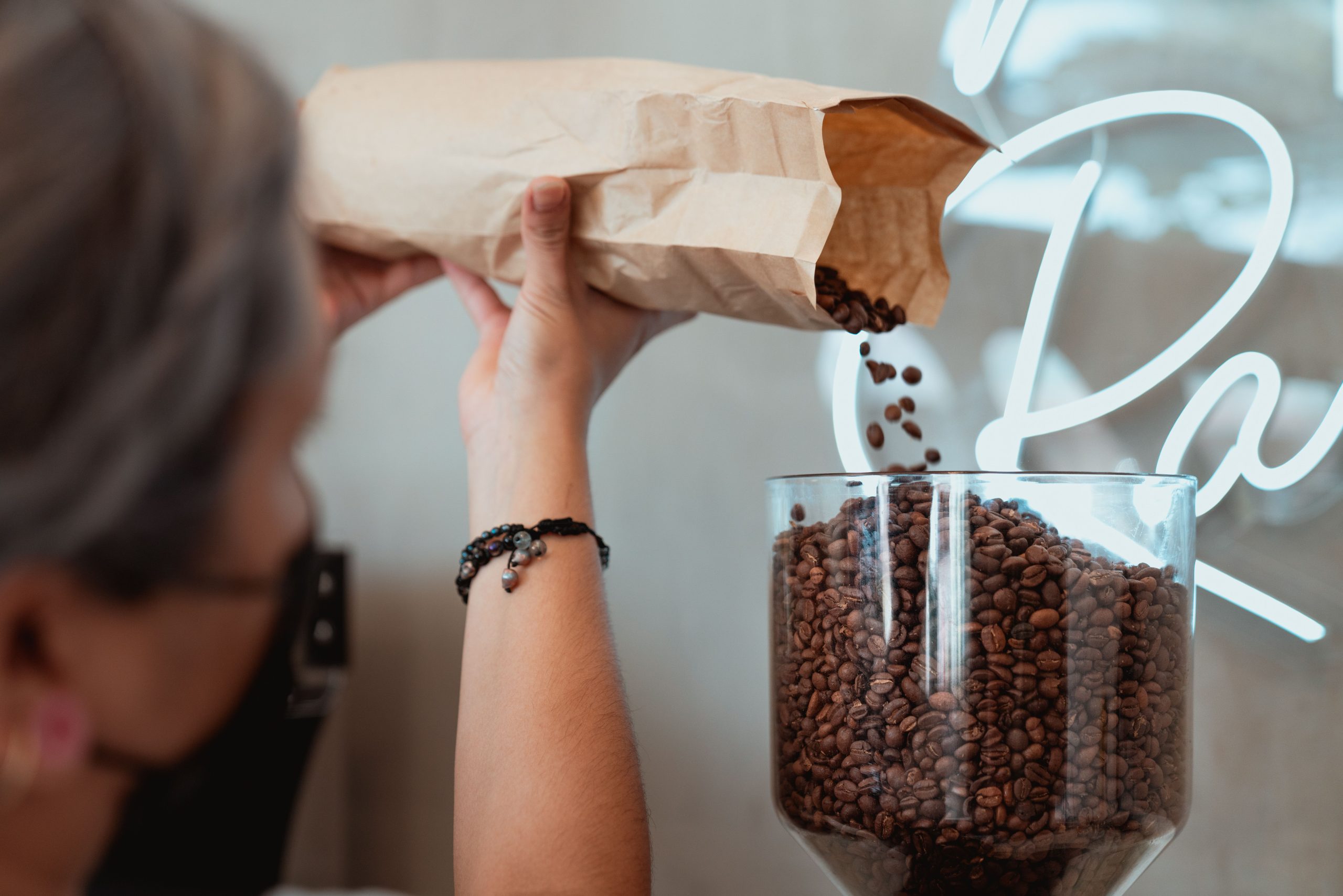
Featured photograph: Los Muertos Crew / Pexels (Pexels License).
Quick Picks
- Baratza Encore ESP (Black) — Espresso and drip in one household
- Baratza Encore (Black) — Straightforward drip and French press
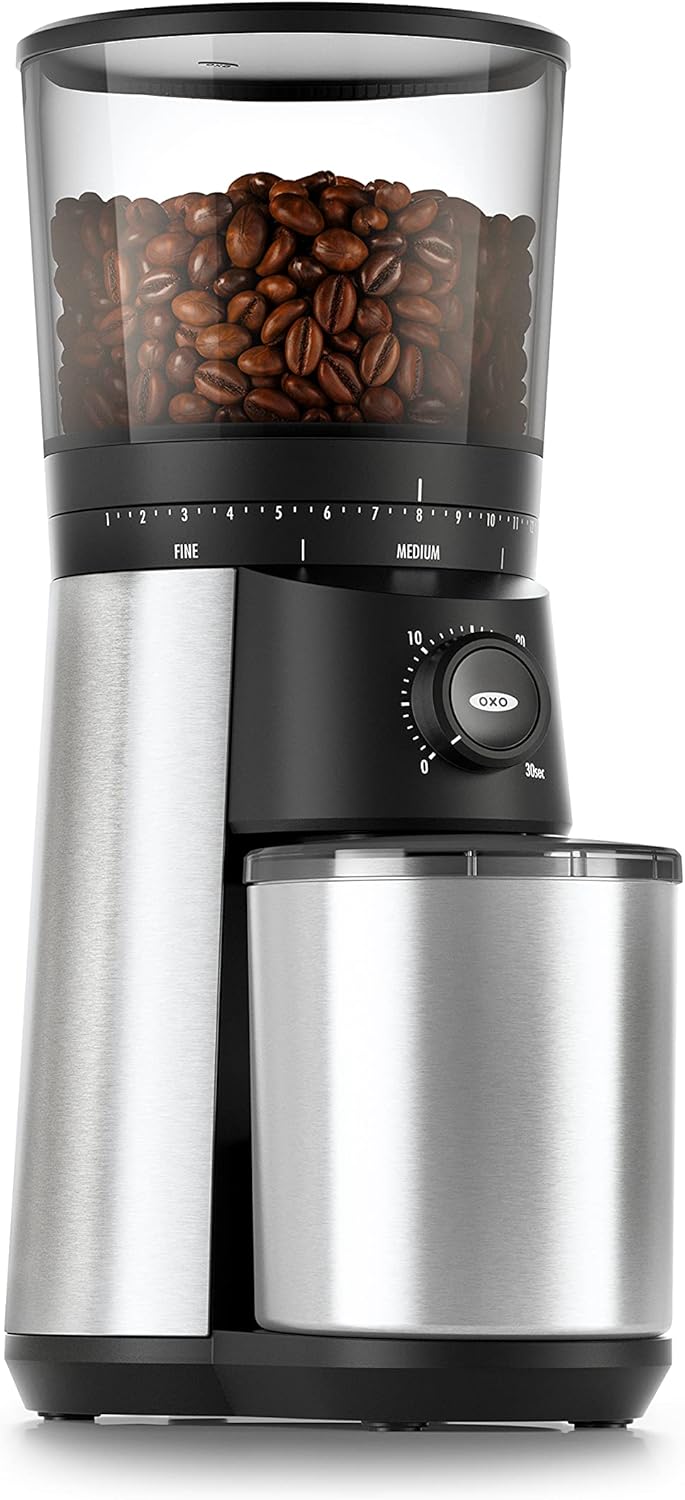
- OXO Brew Compact Conical Burr Grinder — Small apartments and small doses
- Fellow Ode Brew Grinder Gen 2 (Matte Black) — Enthusiast pour-over brewing
Compare Electric Burr Coffee Grinders
This table compares the intended use and adjustment workflow of ten distinct models. Each price button opens that model’s Amazon product page.
| Product | Best for | Adjustment | Amazon |
|---|---|---|---|
| Espresso and drip in one household | 40 steps; espresso 1–20, filter 21–40 | Check the latest price on Amazon | |
| Timed portafilter dosing | 60 settings; digital timed grinding | Check the latest price on Amazon | |
| Weighed single-dose workflow | 41 outer steps; inner fine adjustment | Check the latest price on Amazon | |
| Straightforward drip and French press | 40 steps; simple filter-oriented operation | Check the latest price on Amazon | |
| One-button hopper-based coffee | 15 primary settings with intermediate steps; timer | Check the latest price on Amazon | |
| Small apartments and small doses | 50-gram hopper; slim body; fine micro-adjustments | Check the latest price on Amazon | |
| Repeatable pour-over and drip batches | 40 steps; M2 burr; digital timer | Check the latest price on Amazon | |
| Enthusiast pour-over brewing | 31 steps; flat burrs; filter-only purpose | Check the latest price on Amazon | |
| Simple budget-minded filter coffee | 16 settings; cup-selector dial | Check the latest price on Amazon | |
| Changing family brew routines | 70 settings; automatic dose-timing feature | Check the latest price on Amazon |





How to Choose an Electric Burr Coffee Grinder
Use the brewer to define the adjustment range
An electric burr grinder for espresso and drip coffee needs small, usable steps in the fine range and a coarser range for filter coffee. Espresso changes can noticeably affect flow, while French press and cold brew are more forgiving. The Encore ESP separates settings for these purposes. By contrast, the Ode Gen 2 is meant for brewed coffee and Fellow explicitly says it is not intended for espresso. Start with this distinction before comparing prices or the number of positions.
Choose a workflow you will actually follow
A timed burr grinder for drip coffee works well when you use the same beans every day, because a large hopper and timer make the routine simple. A single-dose grinder is convenient if you weigh fresh beans and switch roasts frequently. Neither method automatically gives perfect dose accuracy. Timed grinding depends partly on bean characteristics, while single dosing still may leave some grounds inside the grinder. If you are choosing an electric burr coffee grinder for pour-over and French press, prioritize comfortable coarser settings and easy transfer into the brewer.
Quick decision aid by brewing method
- Nonpressurized espresso: Compare the Encore ESP, Opus and Breville for fine adjustment and portafilter workflow.
- Pour-over: Compare the filter-focused Ode Gen 2 and timed Virtuoso+.
- Drip coffee: Consider simple hopper grinders such as the original Encore or full-size OXO.
- French press: Focus on usable coarse adjustments and easy batch collection.
- Small kitchen: Measure available height and dose size before choosing the OXO Compact.
Understand burrs, static and retention
Conical and flat burr designs can both work well. Shape alone does not prove taste superiority. Burr construction, adjustment precision and workflow are more informative. Static may scatter grounds, and retained coffee can mix into the next dose; no product should be assumed to retain literally nothing. Look for a removable burr and manufacturer-approved cleaning method. Do not rinse an electrical motor.
Ten Electric Burr Coffee Grinder Reviews
1. Baratza Encore ESP (Black)
Best for: Two-brewer households needing fine espresso adjustment and coarser filter grinding
The Baratza Encore ESP is a practical answer to a common home-coffee problem: one person drinks espresso while another brews drip or pour-over. Baratza separates its forty settings into a finer espresso range at positions one through twenty and a coarser range for brewed coffee. That makes the adjustment system more meaningful than merely comparing the largest number on a box. Its conical burr and supplied grounds collection options suit everyday use rather than a highly specialized commercial workflow. This is not the original Encore: the ESP provides a distinct fine-grind adjustment scheme. You still need to dial in the espresso machine’s basket using the actual beans and dose, and switching to filter coffee requires recording or remembering your old setting. For households that truly need both brew styles, that compromise is reasonable.
2. Breville Smart Grinder Pro (Stainless Steel)
Best for: Daily espresso users who prefer screen-guided, repeatable timed grinding
The Breville Smart Grinder Pro is oriented toward a quick morning routine with clear controls. Its LCD, sixty adjustable positions and programmable grinding time let you keep a familiar setting visible while grinding into a portafilter cradle or a separate collection vessel. This is useful if you primarily make espresso but occasionally want drip or French press coffee. Unlike a simple push-button grinder, it invites the user to repeat a timed setting rather than hold down a switch. Time is not weight, however; beans of different roast levels can produce different output during the same interval. Weigh a dose while dialing in a new coffee, and check the size of your espresso portafilter against the cradle. Buyers who constantly alternate between coffee bags may find it easier to weigh individual doses instead of relying on a filled hopper and a timer.
3. Fellow Opus Conical Burr Grinder (Original)
Best for: Coffee explorers switching between espresso, pour-over and immersion brewing
The original Fellow Opus is suited to a person who enjoys weighing a fresh dose of beans and choosing a brew method at the moment. Its outer adjustment ring has forty-one positions, with smaller changes available through an internal adjustment feature. That helps bridge espresso and coarser coffee styles without a huge hopper. The catch-cup-centered workflow also makes it convenient to prepare several different beans during a week. This is the original Opus, not the newer Opus 2; the distinction matters because the adjustment mechanisms differ. If you switch from French press to espresso often, record the full adjustment rather than only the main dial position. A small amount of retained ground coffee is possible in any grinder, so check output as well as input when precision matters. It rewards experimentation more than set-and-forget operation.
4. Baratza Encore (Black)
Best for: Everyday brewed coffee without espresso-specific complexity
The original Baratza Encore is attractive precisely because it is uncomplicated. Use the adjustment collar to select a starting grind, run the grinder and adjust according to the brewed cup. With forty settings, it is a useful step beyond a blade grinder for automatic drip coffee, pour-over and French press. A hopper lets you keep beans ready for several mornings. Baratza also offers cleaning and replacement-part information, which can make ownership less frustrating if a small component wears. The key buying warning is to distinguish this model from the Encore ESP. The original Encore is principally a filter-coffee choice, while the ESP adds a dedicated finer adjustment scheme for espresso. Do not spend extra for espresso-oriented features if you never brew it, but do not buy the original expecting precise nonpressurized espresso tuning. Its greatest strength is a simple, repeatable brewed-coffee habit.
5. OXO Brew Conical Burr Grinder (Silver)
Best for: Busy drip-coffee households wanting a familiar repeated timer
The full-size OXO Brew Conical Burr Grinder makes sense when your coffee routine hardly changes: fill the hopper, choose a grind size and press the button to repeat a familiar grinding interval. OXO provides fifteen primary settings with finer changes between them, as well as a timer that remembers the previous duration. That arrangement is convenient for automatic drip and immersion brewing, where the ability to return to a familiar recipe is more important than a sophisticated display. A timer still produces only an approximate amount of grounds because beans feed differently according to roast and hopper level. For a demanding espresso basket, compare a grinder with more specialized fine adjustments. This silver model is not the smaller black OXO Compact. Measure cabinet clearance, especially when removing the hopper lid, and keep the collection container clean to reduce grounds accumulating around the outlet.
6. OXO Brew Compact Conical Burr Grinder
Best for: Narrow countertops where a measured batch matters more than hopper capacity
The OXO Brew Compact offers a different tradeoff from its full-size sibling. OXO specifies a narrow body, approximately 10.75 inches tall and 3.75 inches wide, along with a fifty-gram bean capacity. That can be ideal for a person living in an apartment or sharing a crowded kitchen, especially when brewing only one or two mugs at a time. It provides main grind positions and intermediate fine adjustments, so compact size does not mean there is only one coarse and one fine choice. The smaller capacity is a real limitation for families filling a large carafe, because refilling may become part of the process. Do not assume a high number of adjustments automatically means the grinder is optimal for espresso. Match the maker’s intended grind range to your brewer, and confirm the listing is for the black Compact rather than OXO’s much larger silver model.
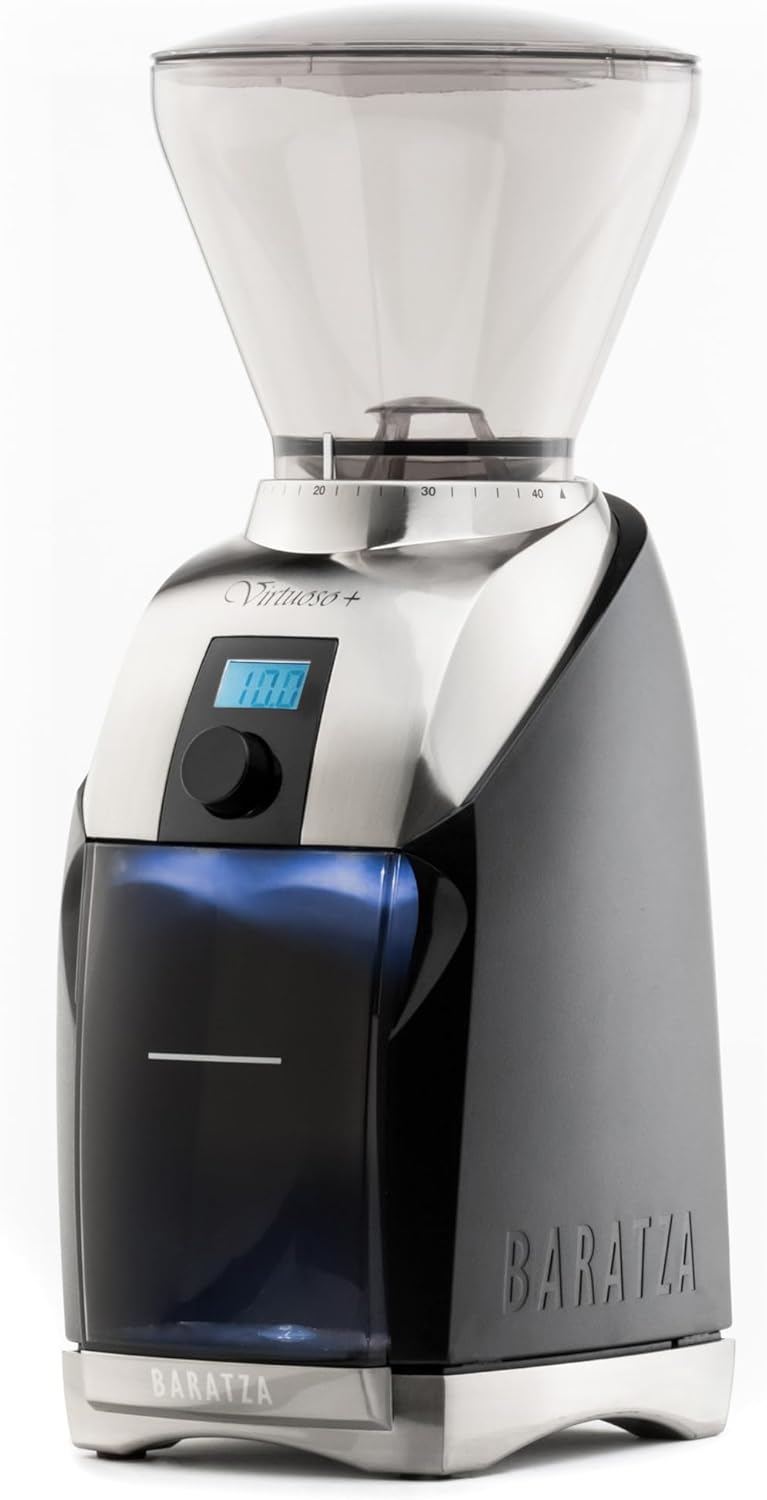
7. Baratza Virtuoso+ (Black)
Best for: Dedicated filter brewers wanting timed control without a touchscreen menu
The Virtuoso+ is aimed at a filter-coffee enthusiast who wants a familiar hopper grinder with more convenient batch control. Baratza specifies forty adjustment settings, an M2 conical steel burr and a digital timer adjustable in small increments. That timer helps when you make the same drip or pour-over recipe every morning and do not want to hold down a pulse switch. It does not eliminate the value of weighing beans when switching to a new roast. The biggest decision is whether those conveniences justify the difference from the simpler original Encore. For French press or drip coffee, both may cover the necessary range. For nonpressurized espresso, the Encore ESP’s fine adjustment design remains a more directly relevant comparison. The Virtuoso+ is most compelling for someone who enjoys consistent filter brewing and wants a straightforward step up in control without adopting a fully single-dose workflow.
8. Fellow Ode Brew Grinder Gen 2 (Matte Black)
Best for: Pour-over specialists who do not need to grind espresso
The Fellow Ode Brew Grinder Gen 2 is deliberately more specialized than the all-purpose grinders here. Its flat burrs, thirty-one adjustment steps and measured-bean workflow are intended for filter methods such as pour-over, drip and French press. For someone who enjoys tuning water, dose and grind while making a single carefully prepared mug, its specialized design can be an advantage. Fellow also updated the second generation to address static and ground transfer, although no grinder guarantees a perfectly clean counter. The essential caution is that Fellow explicitly states Ode Gen 2 is not suitable for espresso. Do not buy it hoping that its finest position will work with a nonpressurized espresso basket. If your household includes an espresso machine, consider Encore ESP or Opus instead. Confirm the retailer offer is Gen 2 rather than the first Ode before selecting a product variant.
9. Capresso Infinity Plus (Black 570.01)
Best for: Households wanting a traditional dial rather than a digital display
The Capresso Infinity Plus in black has a familiar design: a bean hopper, a grounds cup, sixteen grind settings and an approximate cup selector. It is aimed at home users who do not want a digital interface for a basic drip coffee or French press routine. Capresso documents removable burr access and a hopper that can store beans for repeated brews. The adjustment system is relatively simple, which makes it easy to return to a general coarse or medium range. That simplicity limits fine control. If espresso shots run too quickly or slowly, a grinder with only sixteen main settings may leave bigger steps than you want. Also treat a cup-selector dial as a convenience rather than a measurement of coffee weight. Confirm the model and housing color before purchase, because the Infinity family contains related products with similar names and distinct finishes.
10. KitchenAid Burr Coffee Grinder (Onyx Black KCG8433OB)
Best for: Shared kitchens alternating between drip and espresso-style drinks
KitchenAid’s KCG8433 offers a broad selection of grind sizes and a dosing system intended to simplify the switch between brewing methods. KitchenAid lists seventy adjustments and automatic time selection based on the desired dose and brew method. That makes it appealing in a kitchen where one person uses an automatic drip machine while another may occasionally prepare French press or espresso. The hopper and collection vessel keep the operation familiar rather than encouraging a separate weighing ritual every time. The timing feature is helpful but cannot guarantee the same gram weight with every coffee, particularly when roast and bean density change. Measure the output when calibrating a new recipe. If fine espresso adjustments are your main priority, compare the usable range and basket compatibility instead of simply counting settings. Verify the Onyx Black KCG8433OB finish because the same grinder family appears in multiple colors.
Setup, Common Problems and Maintenance
Establish a repeatable starting recipe
Unplug and inspect your grinder according to its manual before first use. When making espresso, keep the basket, dry dose and beverage target consistent while adjusting the grind. For brewed coffee, record your filter, water amount and grinder position. Settings are not standardized between brands, so another person’s dial number is only a clue.
Espresso flows too fast or almost stalls
A too-coarse grind can cause quick flow, while a too-fine grind can slow the machine dramatically, but dose and tamp also matter. Adjust a small amount at a time and compare successive shots with the same dose. Refer to the espresso machine’s directions rather than assuming every fast shot needs the same correction.
Output drops or the grinder sounds blocked
Turn off and unplug it before checking for a blocked chute or accumulated oily grounds. Follow the maker’s removable-burr instructions. Never reach inside a powered grinding chamber or force a stalled motor. Contact support if unusual noise, heat or repeated jamming persists.
Grounds scatter or cling to the cup
Dry air and static can leave fines around the chute. Position the receiving cup properly, brush away residue only as instructed and avoid unapproved liquids. Some grinders provide anti-static features but none guarantees a perfectly clean counter in every climate.
The same timer gives a different dose
Different roasts and hopper levels feed differently, so grind time cannot guarantee a fixed weight. Weigh the output occasionally, especially after changing beans. A timer is a repeatability aid, not a replacement for a scale in exact recipes.
Old flavors remain after changing beans
Check the manufacturer’s cleaning guidance and clear retained grounds from allowed removable areas. Avoid water on motor parts or harsh cleaners not approved for the machine. If components are worn, source the correct replacement for the exact model rather than a visually similar grinder.
Frequently Asked Questions
Can one burr grinder make espresso and drip coffee?
Yes, if it has fine enough usable adjustment for your espresso basket and sufficiently coarse settings for filter brewing. The Encore ESP and Opus were designed with both uses in mind; the Ode Gen 2 is not suitable for espresso.
What is a good electric burr coffee grinder for pour-over coffee?
Look for repeatable medium-fine adjustments and a convenient grounds cup. A dedicated filter model such as the Ode Gen 2 is a focused option; the Virtuoso+ and original Encore use more traditional hopper workflows.
Is a compact burr coffee grinder for a small kitchen a good choice?
Yes when capacity matches your typical batch. The compact OXO saves width but has a much smaller fifty-gram hopper than a full-size machine. Measure the space and consider how many cups you make.
How often should grinder burrs be cleaned?
Follow the specific manufacturer’s instructions. Clean more often if output slows or oily residue accumulates, and never immerse electrical parts or clean the grinder while it is plugged in.
Do more grind settings guarantee better espresso?
No. Useful granularity at the espresso end matters more than a large total setting count. The actual basket and bean also affect how the shot behaves.
Should I choose timed or weighed dosing?
Use a timer when your daily coffee stays consistent and speed matters. Weigh the beans or grounds when swapping roasts and comparing precise recipes. Both are reasonable; neither removes the need to taste and adjust.
Final Verdict
For one practical home grinder serving espresso and filter coffee, start with the Baratza Encore ESP. For simpler drip brewing at home, the original Baratza Encore is the more focused starting point. Choose the Fellow Ode Gen 2 when you care primarily about pour-over and will not make espresso, or the OXO Brew Compact when counter space matters most. A grinder should suit your actual brewer, not a marketing ranking.
Related kitchen gear: our portable induction cooktop guide, bread maker comparison and home bar ice maker guide.
How We Selected These Grinders
This is independent desk research and a comparison of published product specifications, not a claim that we personally tested the grinders. We evaluated intended brew range, adjustment scheme, day-to-day dosing, counter space, cleaning and model-specific tradeoffs. Reference details can be checked with Baratza’s Encore ESP guide, Breville’s Smart Grinder Pro specifications, Fellow’s espresso compatibility guidance, and each manufacturer’s link provided under its review. Verify the model, seller and configuration on the retailer page before purchase.
As an Amazon Associate, Size Them Up earns from qualifying purchases.